















School Subjects Tier List: Ranking Every Class
Every school day gets split up into these 17 blocks, and you probably loved some and dreaded others. We're ranking the classic school subjects based on how students and teachers actually feel about them, mixed with our own takes where the arguments get heated.
This isn't about which subject is "most important" for your career. It's about the classroom experience itself: the homework load, the dread factor, the moments that stuck with you, and whether anyone ever looked forward to that bell ringing. Disagree with where we put Chemistry? That's the fun part. Make your own list.
The tier list
The community’s tier list fills in as members vote. It appears once 5 members have ranked or voted on these.
Think you can rank them better?
Make your own tier listFree account. Your ranking stays private unless you share it, and it counts toward the community tier list.Vote
SS Tier: The ones people actually miss
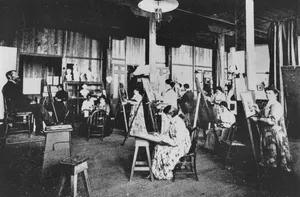
Art
The one hour where nobody's grading you on being right or wrong, just on trying. Messy paint trays, half-finished clay pots, that one kid who's actually really good at drawing hands. Almost nobody looks back on Art class with bitterness.
About Art
A class focused on visual creativity through drawing, painting, sculpture and design. Usually graded on effort and process rather than strict correctness.
- Type
- Elective or core, varies by school
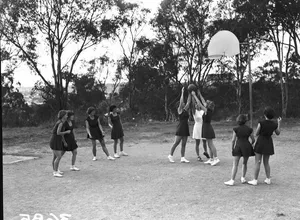
Physical Education
Dodgeball, the mile run, picking teams and praying you're not last. PE is polarizing in the moment but somehow everyone gets nostalgic about it later, even the kids who hated running. It's the subject most likely to turn into an actual core memory.
About Physical Education
A class focused on physical fitness, sports and teamwork, commonly known as PE or Gym. Requirements vary widely by school and region.
- Type
- Core subject in most school systems

Computer Science
Started as a niche elective and turned into the subject kids now actually ask for more of. Building your first working program or website hits different than most worksheets ever could, and it's one of the few classes that feels genuinely useful the day you learn it.
About Computer Science
Covers programming, computational thinking and increasingly topics like web development and data. Has grown rapidly as a school offering over the past couple decades.
- Type
- Elective, increasingly core in some districts
AA Tier: Genuinely good classes
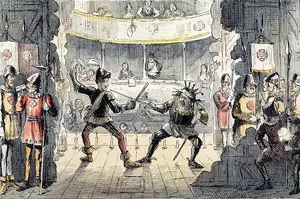
Drama
Forces you out of your shell whether you like it or not, and most people end up grateful for that. The improv games alone make it worth the embarrassment of your first monologue in front of the class.
About Drama
Also called Theater, this class covers acting, improv and stage production, often including a performance component.
- Type
- Elective
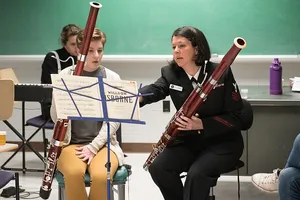
Music
Recorder units aside, Music class tends to age really well in memory. Band and choir especially build a weird kind of loyalty, the kind where alumni still remember their concert pieces years later.
About Music
Covers instrumental or vocal performance, music theory, and often includes band, choir or orchestra as extensions of the standard class.
- Type
- Elective or core, varies by school
Biology
Dissections, ecosystems, the actual human body, Biology has built-in interest that other sciences have to work harder for. The frog dissection day is basically a rite of passage.
About Biology
The study of living organisms, covering topics from cells to ecosystems to genetics. Often includes dissection labs as a hands-on component.
- Type
- Core or advanced science elective

Science
As a general subject (especially in earlier grades) Science gets points for volcano experiments and genuine curiosity before it splits off into the harder, more specific stuff. The hands-on labs are what people remember, not the textbook chapters.
About Science
A general subject in early education that introduces basic concepts in biology, chemistry, physics and earth science before splitting into specific courses in later grades.
- Type
- Core subject
- Typical span
- Elementary and middle school
BB Tier: Solid, no complaints

Geography
Maps, capitals, plate tectonics. Geography rarely gets anyone fired up, but it rarely gets hated either. It's the reliable middle child of the subject list, quietly useful and mostly forgotten until you need to name a country's capital on a trivia night.
About Geography
The study of places, maps, climates and how human societies interact with physical landscapes. Often taught as part of Social Studies in earlier grades.
- Type
- Core or elective subject
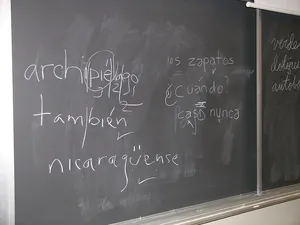
Foreign Language
Everyone wishes they remembered more of their high school Spanish or French than they actually do. The classes themselves can be genuinely fun with the right teacher, but the grammar drills and vocab quizzes drag it down from the top tiers.
About Foreign Language
Covers reading, writing and speaking in a non-native language, with Spanish, French and others as the most commonly offered options depending on school.
- Type
- Core or elective, varies by school
Social Studies
History, government, current events, all crammed into one subject that can go either way depending entirely on whether the teacher makes it a story or a timeline to memorize. When it clicks, it's genuinely engaging.
About Social Studies
A broad subject covering history, government, civics and sometimes geography, aimed at building general knowledge of society and the past.
- Type
- Core subject

Psychology
Usually an elective, and the students who take it tend to actually like it. Learning why people do the weird things they do has obvious appeal, even if some units (hello, statistics) slow it down.
About Psychology
An introductory look at human behavior and the mind, covering topics like memory, development and mental health basics.
- Type
- Elective, common at high school level
CC Tier: Depends entirely on the teacher
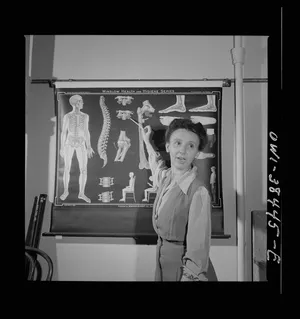
Health
Depends entirely on whether you get an actually useful curriculum or forty minutes of outdated pamphlets. At its best it's practical information nobody else teaches you. At its worst it's a nap.
About Health
Covers topics like nutrition, personal wellness, substance use education and basic first aid, often paired with PE requirements.
- Type
- Core subject in most school systems
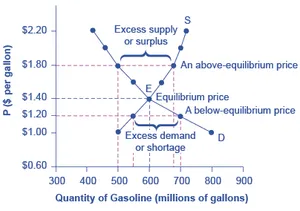
Economics
People either find Economics unexpectedly fascinating or completely dry, and there's not much middle ground. Supply and demand curves either click or they don't, and a lot of students never quite get there.
About Economics
Covers how markets, money and resources work, from basic supply and demand to more complex macro and micro concepts in advanced courses.
- Type
- Elective or required social studies credit
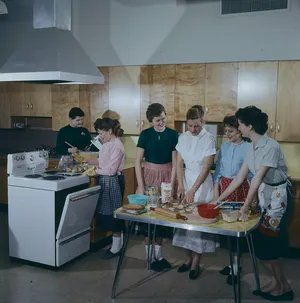
Home Economics
Sewing a pillow and baking cookies sounds fun on paper, and sometimes it is, but the class has a reputation for being treated as a throwaway period. Students who get a teacher who actually cares tend to defend it hard, though.
About Home Economics
Covers practical life skills like cooking, sewing and basic budgeting. Has declined in availability at many schools compared to past decades.
- Type
- Elective
DD Tier: Mostly endured, not enjoyed
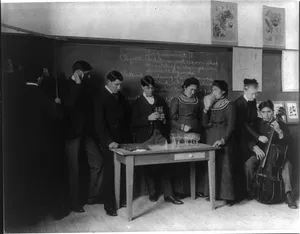
Physics
Respected more than it's enjoyed. The math gets heavy fast, and for a lot of students Physics becomes the class you survive rather than the class you learn from. The ones who do get it tend to love it, but that's a smaller crowd.
About Physics
A science course covering motion, forces, energy and matter, typically requiring a solid grounding in algebra and often trigonometry.
- Type
- Advanced science elective
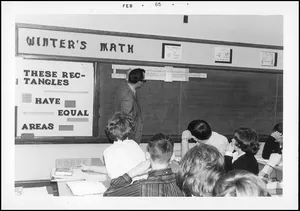
Math
Nobody's neutral on Math. It's foundational and everyone agrees it matters, but ask any room full of adults which class gave them the most homework stress and Math wins by a landslide. Word problems remain undefeated as a source of dread.
About Math
A core subject taught at every grade level, covering arithmetic, algebra, geometry and calculus depending on grade. Known for building cumulatively, meaning gaps early on tend to cause trouble later.
- Type
- Core subject
- Typical span
- K-12
FF Tier: The class everyone groaned about
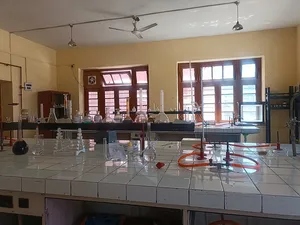
Chemistry
Balancing equations, memorizing the periodic table, and labs that only feel exciting on the one day something actually combusts. Chemistry has a reputation as the class where even kids who like science start to struggle, and it shows in how rarely anyone says they miss it.
About Chemistry
A science course covering atoms, molecules, chemical reactions and lab work. Typically taken in high school after general Science courses.
- Type
- Core or advanced science elective
How we ranked them
We weighed how subjects are remembered across forums, Reddit threads and general school nostalgia: the homework-to-reward ratio, how much a good or bad teacher could change everything, and how often people say "I actually miss this one." Core academic weight matters, but so does whether a class felt alive or like a slog. Where opinions split hard (looking at you, Chemistry and Home Ec), we picked a side and explained why.
Think we got it wrong?
Drag all 17 school subjects into your own tier list, then download the image or share a link.
Rank these yourselfFAQ
What's the most disliked school subject?
Chemistry and Math tend to top the lists for most dreaded, mostly because of heavy homework loads and concepts that build on each other fast, so falling behind early makes the rest of the year rough.
What's the most popular school subject among students?
Art, PE and Computer Science consistently show up as favorites in student surveys and forum discussions, largely because they feel less like sit-and-listen classes and more like doing something.
Is Science one subject or several?
In early grades Science is usually one combined class. By high school it typically splits into Biology, Chemistry and Physics, which is why we ranked general Science separately from those three.
Why did Home Economics rank in the middle?
It's genuinely split. Some students had teachers who made it practical and fun, others remember it as a filler period with little structure, so it lands in the middle rather than higher or lower.
Does the teacher matter more than the subject itself?
Based on how often this comes up in student discussions, yes, often a lot. Subjects like Health, Economics and Home Economics seem to shift tiers entirely depending on who's teaching them.
More rankings
Image credits
- ArtPhoto: Item is held by John Oxley Library, State Library of Queensland., Public domain (Wikimedia Commons) · Source
- Physical EducationPhoto: Queensland State Archives, Public domain (via Openverse) · Source
- Computer SciencePhoto: Fredericknoronha, CC BY-SA 4.0 (Wikimedia Commons) · License · Source
- DramaPhoto: John Leech, Public domain (Wikimedia Commons) · Source
- MusicPhoto: Official U.S. Navy Page from United States of America MUC Adam Grimm/U.S. Navy, Public domain (Wikimedia Commons) · Source
- BiologyPhoto: astro_matt, CC BY-SA 2.0 (Wikimedia Commons) · License · Source
- SciencePhoto: NazWeb, CC BY-SA 3.0 (Wikimedia Commons) · License · Source
- GeographyPhoto: derivative work: NikNaks P geography.png: נעמה מ P globe.svg: Booyabazooka, CC BY-SA 4.0 (via Openverse) · License · Source
- Foreign LanguagePhoto: Own work by the original uploader, CC BY-SA 3.0 (Wikimedia Commons) · License · Source
- Social StudiesPhoto: PCHS-NJROTC, CC BY-SA 3.0 (Wikimedia Commons) · License · Source
- PsychologyPhoto: Mrmw, Public domain (Wikimedia Commons) · Source
- HealthPhoto: Esther Bubley, Public domain (Wikimedia Commons) · Source
- EconomicsPhoto: OpenStax College, CC BY 4.0 (Wikimedia Commons) · License · Source
- Home EconomicsPhoto: BiblioArchives / LibraryArchives, CC BY 2.0 (Wikimedia Commons) · License · Source
- PhysicsPhoto: Johnston, Frances Benjamin, 1864-1952, photographer, Public domain (Wikimedia Commons) · Source
- MathPhoto: This file was contributed to Wikimedia Commons by Hennepin County Library as part of a cooperation project. The donation was facilitated by the Digital Public Library of America, via its partner Minne, Public domain (Wikimedia Commons) · Source
- ChemistryPhoto: Koshur, CC BY-SA 4.0 (Wikimedia Commons) · License · Source