










Greatest NFL Running Backs of All Time, Tier List
Thirty backs, one impossible argument. We've got bruisers, burners, pass-catchers and guys who did all three better than anyone had a right to. This list runs from Jim Brown's nine-year reign of terror to modern workhorses still adding chapters.
Ranking running backs across eras is messy. Yards mean something different in a 14-game 1960s season than a 17-game pass-happy one now. So this leans on what fans and critics actually argue about: dominance versus their own league, how much they changed the position, and whether they showed up when it mattered. Disagree? Good. That's the fun of it. Rank your own and see where it breaks.
The tier list
The community’s tier list fills in as members vote. It appears once 5 members have ranked or voted on these.
Think you can rank them better?
Make your own tier listFree account. Your ranking stays private unless you share it, and it counts toward the community tier list.Vote
SS Tier: The no-doubt legends
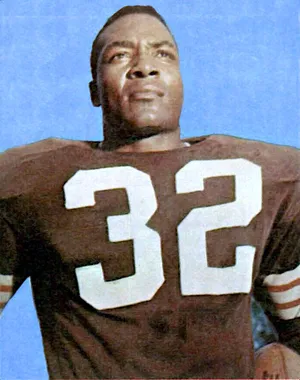
Jim Brown
Nine seasons, eight rushing titles, and he retired at the top rather than fade out. Watch the tape and the thing that jumps out isn't just the power, it's that nobody ever got a clean hit on him. Still the default answer when people argue about the single best football player ever, not just running back.
About Jim Brown
Fullback for the Cleveland Browns from 1957 to 1965, widely considered one of the greatest football players ever. He led the league in rushing eight times and retired at the peak of his powers.
- Team
- Cleveland Browns
- Years
- 1957-1965
- Rushing titles
- 8
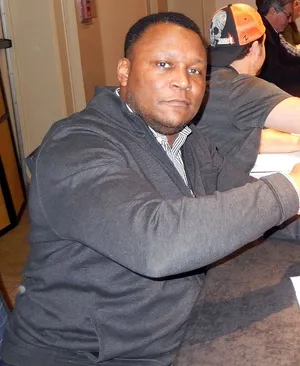
Barry Sanders
The only back who could turn a busted play behind the line into a 60-yard touchdown that defied physics. He retired with gas left in the tank, which still annoys fans who wanted to see him chase records. Nobody has ever made grown men miss tackles in open space quite like this.
About Barry Sanders
Detroit Lions running back known for his elusiveness and ability to make defenders miss in the open field. He retired unexpectedly in 1999 while still near the top of his game.
- Team
- Detroit Lions
- Years
- 1989-1998
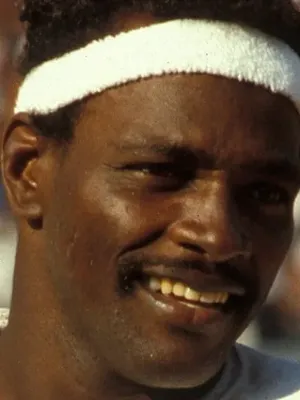
Walter Payton
Sweetness wasn't just a nickname, it was a philosophy: stiff-arms, spin moves, and a willingness to throw blocks and catch passes most star backs wouldn't bother with. He held the all-time rushing record for over a decade and did it on a Bears offense that wasn't always loaded around him. Toughness and skill in equal measure, which is rarer than it sounds.
About Walter Payton
Chicago Bears legend nicknamed Sweetness, he held the NFL's all-time rushing record for years after his retirement. Known for his toughness, blocking and receiving as much as his rushing.
- Team
- Chicago Bears
- Years
- 1975-1987
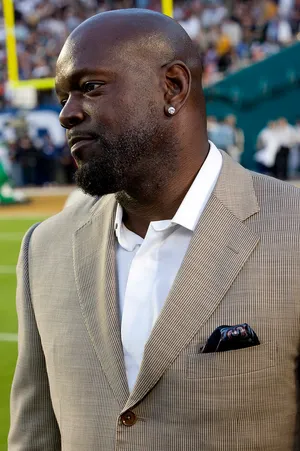
Emmitt Smith
The all-time rushing leader, and fans will argue forever about whether that's because of the Dallas offensive line or despite the doubters who said he wasn't fast enough. Three Super Bowl rings and a knack for finding the end zone in big moments settle a lot of that argument. Consistency over a long career counts for something, and nobody did it longer at this level.
About Emmitt Smith
Dallas Cowboys workhorse and the NFL's all-time leading rusher. Won three Super Bowls as part of Dallas's 1990s dynasty.
- Team
- Dallas Cowboys
- Super Bowls
- 3
AA Tier: A notch below immortal
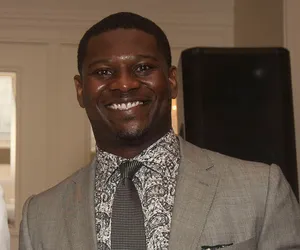
LaDainian Tomlinson
The 2006 season alone, 28 rushing touchdowns and an MVP, should be enough, but LT also caught passes out of the backfield like a wide receiver and threw touchdown passes when defenses forgot about him. San Diego never got him a ring, which stings when you watch how good he was in those playoff losses. One of the most complete offensive weapons the position has produced.
About LaDainian Tomlinson
San Diego Chargers star known for his 2006 MVP season, in which he set the single-season touchdown record. A dangerous dual-threat back who excelled as a receiver and occasional passer.
- Team
- San Diego Chargers
- MVP season
- 2006
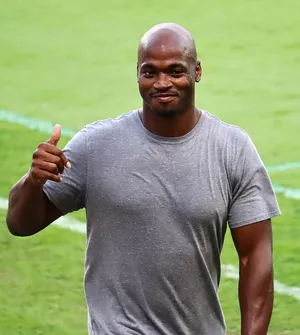
Adrian Peterson
Coming back from a torn ACL to nearly break the single-season rushing record the very next year is the kind of thing that shouldn't be possible. All Day ran like every carry was personal, breaking tackles that looked like clean hits on film. A generational talent whose off-field issues complicate but don't erase what he did on Sundays.
About Adrian Peterson
Minnesota Vikings star known for explosive power running and a historic comeback from a torn ACL. One of the most physically dominant runners of his generation.
- Team
- Minnesota Vikings
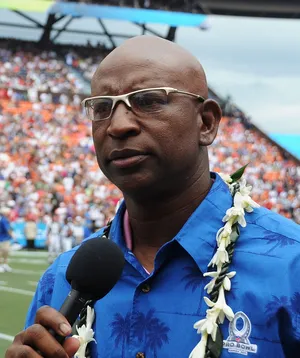
Eric Dickerson
Still holds the single-season rushing record, set in just his second year, running behind that high-stepping gait that made him look like he was gliding. Durability questions and contract fights followed him around the league, but the production never really dipped. A genuine speed-power combo defenses never solved.
About Eric Dickerson
Los Angeles Rams back who still holds the NFL single-season rushing record, set in 1984. Known for his distinctive upright running style and goggles.
- Team
- Los Angeles Rams
- Single-season record
- 2,105 yards (1984)
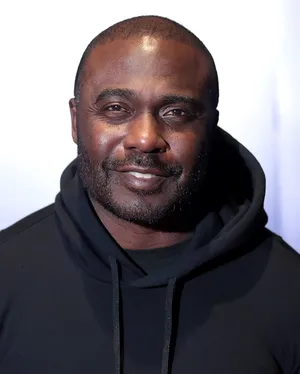
Marshall Faulk
The engine of the Greatest Show on Turf, and arguably the best receiving back the league has ever seen out of the backfield. Faulk made defensive coordinators pick their poison and lose either way. His 1999 and 2000 seasons redefined what a do-everything offensive weapon could look like.
About Marshall Faulk
Key piece of the St. Louis Rams' Greatest Show on Turf offense, excelling equally as a rusher and receiver. Won league MVP in 2000.
- Team
- St. Louis Rams
- MVP season
- 2000

Gale Sayers
A short career, derailed by knee injuries, but the highlight reel is still jaw-dropping almost 60 years later. Six touchdowns in a single game as a rookie, kick returns that broke games open, cuts that look edited in. If longevity counted for nothing, he's top three on this list easily.
About Gale Sayers
Chicago Bears running back and return specialist whose career was shortened by knee injuries. Famous for a six-touchdown game as a rookie.
- Team
- Chicago Bears
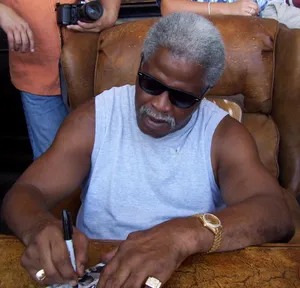
Earl Campbell
Campbell didn't run around people, he ran through them, and the Houston Oilers built an entire offensive identity around that violence. Linebackers who tackled him talked about it for the rest of their careers. A brutally short prime, but what a prime it was.
About Earl Campbell
Houston Oilers power back known for one of the most punishing running styles in league history. Won multiple rushing titles and league MVP honors.
- Team
- Houston Oilers
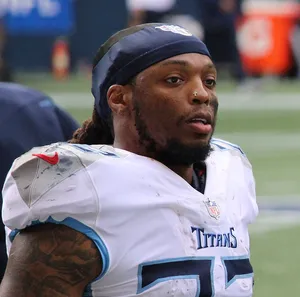
Derrick Henry
Watching defenders bounce off Henry in the open field has become one of the league's signature sights, and his 2,000-yard season in 2020 proved it wasn't a fluke against bad run defenses. A throwback bruiser in an era that supposedly doesn't value bruisers anymore. Still adding to a case that keeps getting stronger.
About Derrick Henry
Power running back known for a punishing style and a 2,000-yard rushing season with the Tennessee Titans.
- Team
- Tennessee Titans
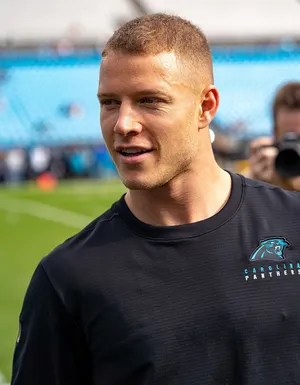
Christian McCaffrey
A true dual-threat weapon who's had seasons with over 1,000 rushing and 1,000 receiving yards, which is a stat line almost nobody else owns. Injuries have interrupted the peak at times, but when healthy he's as dangerous as anyone on this list touching the ball in any way. The modern template for the do-everything back.
About Christian McCaffrey
Versatile back known for excelling equally as a rusher and receiver, with seasons posting over 1,000 yards in both categories.
- Teams
- Panthers, 49ers
BB Tier: Hall of Fame caliber, real argument for higher
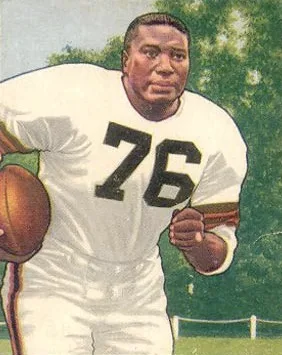
Marion Motley
One of the first Black players in the modern NFL, and arguably the best power back of his era, blending size and speed that defenses of the late 1940s simply hadn't seen. His numbers get overlooked because the AAFC and early NFL don't get the respect they deserve. Belongs in any serious conversation about who built the position.
About Marion Motley
Pioneering power back for the Cleveland Browns in the late 1940s, one of the first Black players in the modern NFL era.
- Team
- Cleveland Browns
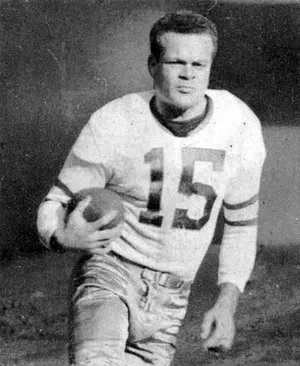
Steve Van Buren
The first truly dominant power back in NFL history, leading Philadelphia to back-to-back championships in the late 1940s. He led the league in rushing four times playing on mud fields in leather helmets. Easy to forget now, but he was the standard before Jim Brown reset it.
About Steve Van Buren
Philadelphia Eagles back of the late 1940s who led the team to back-to-back NFL championships, considered the first dominant power runner in league history.
- Team
- Philadelphia Eagles
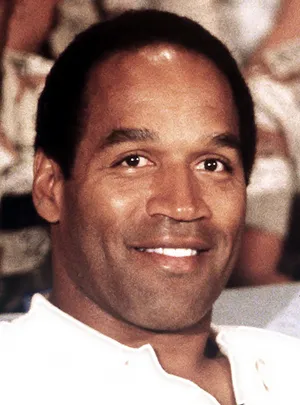
O. J. Simpson
On the field, the 2,003-yard season in 1973 (in just 14 games) was a legitimate watershed moment for the position. What happened after his career is unavoidable and sits uncomfortably next to the highlight reel. We're ranking the football here, and the football was genuinely great.
About O. J. Simpson
Buffalo Bills running back who became the first player to rush for 2,000 yards in a season. His post-career legal history remains a significant and unavoidable part of his public legacy.
- Team
- Buffalo Bills
- 2,000-yard season
- 1973
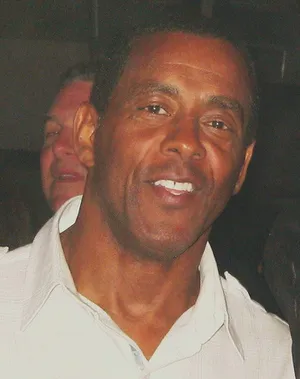
Tony Dorsett
A home run threat every time he touched the ball, Dorsett gave Dallas a vertical rushing dimension that complemented a stacked roster around him. His 99-yard touchdown run against the Vikings happened with only 10 men in the backfield blocking, which tells you about the burst. A Hall of Famer who sometimes gets lost between Emmitt Smith's shadow on his own team's history.
About Tony Dorsett
Dallas Cowboys back known for breakaway speed, part of the team's strong 1970s and 1980s rosters. Heisman winner at Pittsburgh before going pro.
- Team
- Dallas Cowboys
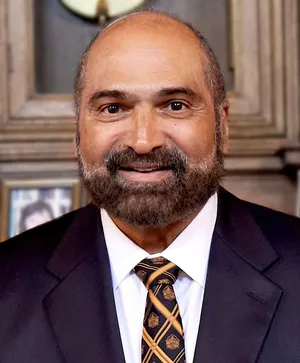
Franco Harris
The Immaculate Reception is the moment everyone remembers, but Harris was also the steady, powerful back who helped anchor four Pittsburgh Super Bowl teams. Not flashy, just reliable in exactly the way a dynasty needs its lead back to be. Underrated once the highlight reels move on to other guys.
About Franco Harris
Pittsburgh Steelers back best known for the Immaculate Reception, and a key part of the Steelers' 1970s dynasty.
- Team
- Pittsburgh Steelers
- Super Bowls
- 4
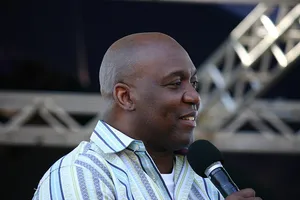
Thurman Thomas
The engine of those Buffalo no-huddle offenses, Thomas was dangerous as a runner and just as dangerous catching passes, which is why he won an MVP. Four straight Super Bowl trips without a ring is brutal, but that run of dominance in the AFC was real. Quietly one of the most complete backs of his generation.
About Thurman Thomas
Buffalo Bills back central to the team's four consecutive Super Bowl appearances in the early 1990s. Won league MVP in 1991.
- Team
- Buffalo Bills
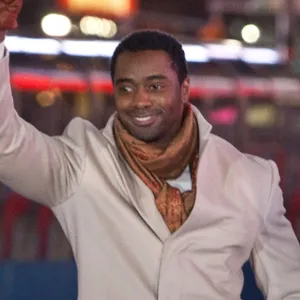
Curtis Martin
Never flashy, rarely the best back in his own conference in a given year, but Martin just kept piling up yards season after season until he had the numbers of a surefire Hall of Famer. Durability and consistency are underrated traits, and he had both in spades. The quiet workhorse who outlasted louder names.
About Curtis Martin
Patriots and Jets workhorse known for remarkable consistency, retiring among the top rushers in NFL history.
- Teams
- Patriots, Jets
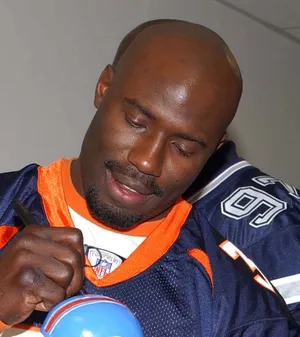
Terrell Davis
A three-year peak as good as almost anyone's, capped by a Super Bowl MVP and a 2,000-yard season that powered Denver's back-to-back titles. Injuries cut the career short enough that Hall of Fame voters debated him for years before finally saying yes. Pure what-if territory, but what a peak.
About Terrell Davis
Denver Broncos back whose brief but dominant peak included a 2,000-yard season and a Super Bowl MVP award.
- Team
- Denver Broncos
- Super Bowl MVP
- Super Bowl XXXII
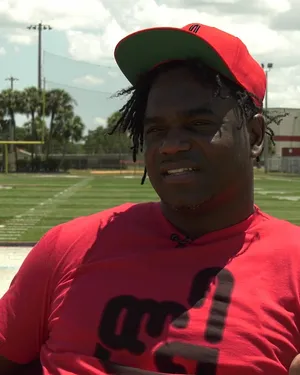
Edgerrin James
Consistently excellent for a decade, James racked up rushing titles and all-purpose yards without ever quite getting the national attention of flashier backs. Indianapolis's offense ran through him before it became Peyton Manning's passing show. A heavily underrated case when people build these lists.
About Edgerrin James
Indianapolis Colts back who led the league in rushing as a rookie and remained a highly productive back for over a decade.
- Team
- Indianapolis Colts
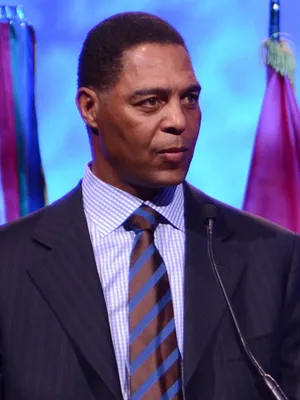
Marcus Allen
A Super Bowl MVP with a dazzling Rose Bowl pedigree before he even got to the pros, Allen combined power and patience in a way that made him dangerous near the goal line. His later feud with Al Davis overshadowed how good he still was. One of the smoothest cutback runners the league has seen.
About Marcus Allen
Raiders and Chiefs back known for patient, cutback running style. Super Bowl MVP and Heisman Trophy winner at USC.
- Teams
- Raiders, Chiefs
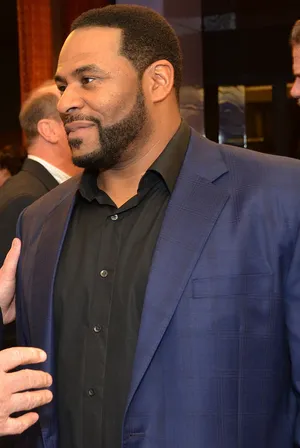
Jerome Bettis
The Bus earned the nickname honestly, wearing down defenses in the fourth quarter of games Pittsburgh needed to win. He retired a Super Bowl champion in his hometown, which is about as good a storybook ending as this position gets. Goal-line power, mixed with more patience than people give him credit for.
About Jerome Bettis
Known as The Bus, a powerful short-yardage runner who won a Super Bowl with the Pittsburgh Steelers in his hometown.
- Team
- Pittsburgh Steelers
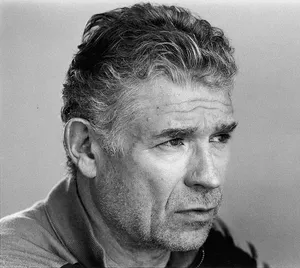
John Riggins
Riggo's postseason run with Washington, including that famous fourth-and-one touchdown run in Super Bowl XVII, is the stuff of legend. He wasn't the fastest or flashiest, but in big moments he just refused to go down. A personality as big as his workload.
About John Riggins
Washington back known for his postseason toughness, including a signature touchdown run in Super Bowl XVII.
- Team
- Washington
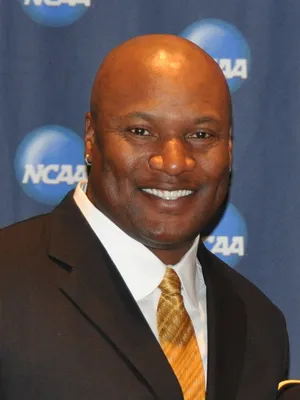
Bo Jackson
A legitimately short career, cut off by a hip injury, but the legend is built on things that actually happened: running over Brian Bosworth, a 91-yard touchdown on Monday Night Football, a throw from the outfield that looked computer-generated. We can't rank him higher given how little he actually played, but what he did play was unforgettable.
About Bo Jackson
Dual-sport star who played both in the NFL and MLB, known for extraordinary athleticism before a hip injury cut his football career short.
- Team
- Los Angeles Raiders
CC Tier: Great peaks, shorter resumes
Shaun Alexander
His 2005 MVP season, 27 rushing touchdowns, led Seattle to a Super Bowl appearance, and for a couple of years he was the league's most dangerous scorer near the goal line. The drop-off afterward was steep and fast, which hurts his overall case. A peak that was legitimately special, even if it didn't last.
About Shaun Alexander
Seattle Seahawks back whose 2005 MVP season helped lead the team to its first Super Bowl appearance.
- Team
- Seattle Seahawks
- MVP season
- 2005
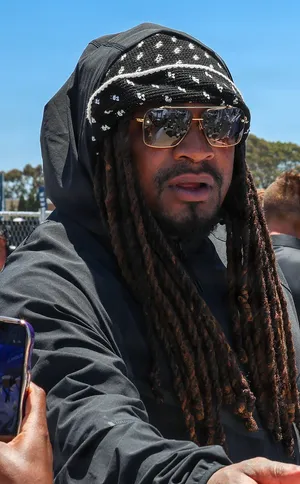
Marshawn Lynch
Beast Mode is one of the great nicknames in football, earned through runs where he seemed to collect extra defenders just to shrug them off. The Seattle fanbase still hasn't forgiven that goal-line play call instead of giving him the ball. A cult hero whose peak production backs up the legend.
About Marshawn Lynch
Known as Beast Mode, a Seattle Seahawks back famous for his powerful running style and a memorable run in the 2010 playoffs.
- Team
- Seattle Seahawks
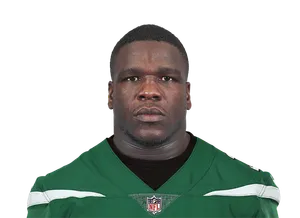
Frank Gore
Gore never had a signature MVP season, but he quietly climbed into the top tier of the all-time rushing list by simply never stopping. Durability and professionalism across a career spanning multiple decades and multiple teams is its own kind of greatness. The ultimate compiler, in the best sense of that word.
About Frank Gore
Durable back who played for several teams across a long career, finishing among the NFL's all-time leading rushers.
- Teams
- 49ers, and others
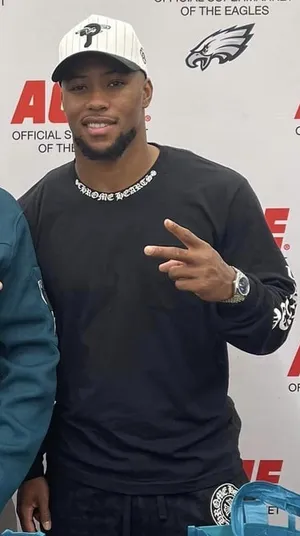
Saquon Barkley
Flashes of genuine Barry Sanders-level athleticism have shown up throughout his career, including runs that look impossible in real time. Injuries and some rough Giants offenses slowed the full-career case for a long stretch. Still writing his story, with recent seasons reminding everyone what the hype was about.
About Saquon Barkley
Explosive athlete drafted second overall by the New York Giants, known for highlight-reel runs and battling through injuries.
- Team
- New York Giants
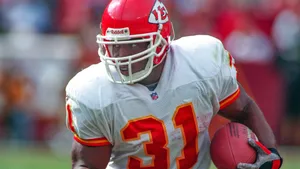
Priest Holmes
For about three seasons, nobody in football was more valuable, piling up touchdowns at a historic rate for Kansas City's high-powered offense. Injuries cut that peak off before it could turn into a Hall of Fame-level career total. One of the great what-if peaks in modern NFL history.
About Priest Holmes
Kansas City Chiefs back who had a historically productive three-year peak as a rusher and receiver before injuries shortened his career.
- Team
- Kansas City Chiefs
How we ranked them
We weighed peak dominance over the backs' own era, career longevity and volume, postseason and big-game performance, and how much a player changed the way the position is played or scouted. Advanced stats mattered, but so did the eye test and what actually shows up in old game film and highlight reels. Where fan consensus splits hard (see: Barry vs. Emmitt, Bo's legend vs. his short career), we picked a side and explained why.
Think we got it wrong?
Drag all 30 greatest nfl running backs of all time into your own tier list, then download the image or share a link.
Rank these yourselfFAQ
Who is the greatest NFL running back of all time?
Most fans and critics land on Jim Brown, Walter Payton or Barry Sanders. Brown's dominance over his own era and short, undefeated-feeling prime usually puts him at number one in these debates.
Is Emmitt Smith the greatest running back ever because of the rushing record?
He's the all-time leading rusher, but plenty of fans argue Barry Sanders or Jim Brown were more dominant on a per-carry basis. The record is real, the GOAT argument is still split.
Why is Bo Jackson ranked where he is despite such a short career?
Jackson's prime was spectacular but brief due to a hip injury that ended his NFL career early. We rank him on what he actually did, not just the highlight reels and legend.
Where do active players like Derrick Henry and Christian McCaffrey rank?
Both land in the A tier here. Their resumes are still growing, but what they've already done, Henry's bruising 2,000-yard season and McCaffrey's dual-threat production, already stacks up against all-time greats.
How did you compare old-era backs like Jim Brown to modern ones?
We looked at dominance relative to their own league and era, not just raw counting stats, since schedules and passing rules changed how rushing numbers look across decades.
More rankings
Image credits
- Jim BrownPhoto: Topps, Public domain (Wikimedia Commons) · Source
- Barry SandersPhoto: Greg2600, CC BY-SA 2.0 (Wikimedia Commons) · License · Source
- Walter PaytonImage: Pro Football Hall of Fame, © Pro Football Hall of Fame · Source
- Emmitt SmithPhoto: Anthony Quintano from Honolulu, HI, United States, CC BY 2.0 (Wikimedia Commons) · License · Source
- LaDainian TomlinsonPhoto: original: U.S. Navy MC2 Jesse Monford on behalf of Naval Surface Warriors derivative: Diddykong1130, CC BY-SA 2.0 (Wikimedia Commons) · License · Source
- Adrian PetersonPhoto: 2C2K Photography, CC BY 4.0 (Wikimedia Commons) · License · Source
- Eric DickersonPhoto: Master Sgt. Cohen A. Young, Public domain (Wikimedia Commons) · Source
- Marshall FaulkPhoto: Gage Skidmore, CC BY-SA 3.0 (Wikimedia Commons) · License · Source
- Gale SayersPhoto: Michael Tolzmann. Cropped by User:Blueag9., Public domain (Wikimedia Commons) · Source
- Earl CampbellPhoto: TankedBevo of ShaggyBevo.com, CC BY 2.5 (Wikimedia Commons) · License · Source
- Marion MotleyPhoto: Bowman (Life time: None.), Public domain (Wikimedia Commons) · Source
- Steve Van BurenPhoto: Bowman Gum, Public domain (Wikimedia Commons) · Source
- O. J. SimpsonPhoto: Gerald Johnson, Public domain (Wikimedia Commons) · Source
- Tony DorsettPhoto: OPEN Sports, CC BY-SA 2.0 (Wikimedia Commons) · License · Source
- Franco HarrisPhoto: Governor Tom Wolf from Harrisburg, PA, CC BY 2.0 (Wikimedia Commons) · License · Source
- Thurman ThomasPhoto: Jeff Kern, CC BY 2.0 (Wikimedia Commons) · License · Source
- Curtis MartinPhoto: Anthony Quintano, CC BY 2.0 (Wikimedia Commons) · License · Source
- Terrell DavisPhoto: Photographer's Mate 1st Class Aviation Warfare Systems Operator Toiete Jackson, USAF, Public domain (Wikimedia Commons) · Source
- Edgerrin JamesPhoto: Collier County Public School District, Public domain (Wikimedia Commons) · Source
- Marcus AllenPhoto: Pfc. Victor Blanco, Public domain (Wikimedia Commons) · Source
- Jerome BettisPhoto: Veronica Davison, CC BY-SA 2.0 (Wikimedia Commons) · License · Source
- John RigginsPhoto: ANestSport, CC BY-SA 4.0 (Wikimedia Commons) · License · Source
- Derrick HenryPhoto: Chipermc, CC BY-SA 4.0 (Wikimedia Commons) · License · Source
- Christian McCaffreyPhoto: All-Pro Reels, CC BY-SA 2.0 (Wikimedia Commons) · License · Source
- Bo JacksonPhoto: U.S. Army Materiel Command (AMC Photo by Chris Putman), CC BY 2.0 (Wikimedia Commons) · License · Source
- Shaun AlexanderPhoto: derivative work: Latics (talk) SeahawksTC-EWU-118.jpg: Tom McDonald, Jason Fierle., CC BY-SA 2.5 (Wikimedia Commons) · License · Source
- Marshawn LynchPhoto: Mass Communication Specialist Seaman Edward Martisius, Public domain (Wikimedia Commons) · Source
- Frank GoreImage: ESPN, © ESPN · Source
- Saquon BarkleyPhoto: PistonsFan2223, CC BY-SA 4.0 (Wikimedia Commons) · License · Source
- Priest HolmesImage: chiefs.com, © Kansas City Chiefs · Source