








Pokémon Generations Ranked: Every Gen From Worst to Best
Nine generations, hundreds of Pokémon, and a fandom that will never agree on which era did it best. We're ranking all nine main-series generations from the shaky GBA days to the open-world present, based on the games themselves: region design, Pokémon roster, story, and how much they actually moved the series forward.
This is the kind of list that starts arguments in Discord servers, so expect some takes you won't love. That's fine. Rank it yourself in your head while you read, and see where you split from the consensus.
The tier list
The community’s tier list fills in as members vote. It appears once 5 members have ranked or voted on these.
Think you can rank them better?
Make your own tier listFree account. Your ranking stays private unless you share it, and it counts toward the community tier list.Vote
SS Tier: The gold standard
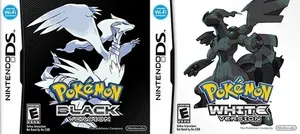
Generation V (Unova)
Black and White get more critical love with every passing year, and it's deserved. A region that refused to reuse old Pokémon until the postgame, a surprisingly dark story about Team Plasma's philosophy on Pokémon liberation, and a roster packed with weird, memorable designs like Chandelure and Sigilyph. Black 2 and White 2 then came back and improved the formula with a postgame that actually matters.
About Generation V (Unova)
Black and White set the series in Unova, a region based on New York City, and famously only allowed new Pokémon until after the main story was cleared.
- Platform
- Nintendo DS
- Pokémon introduced
- 156
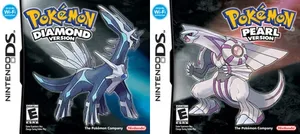
Generation IV (Sinnoh)
Diamond and Pearl were slow, sure, but Platinum fixed nearly everything and gave us the Distortion World, one of the series' few genuinely strange set pieces. Sinnoh's mix of mythology, the Lake Trio, Cyrus and Team Galactic's actually coherent motive, and the physical/special split behind the scenes make this the generation that leveled up competitive Pokémon forever.
About Generation IV (Sinnoh)
Diamond, Pearl and Platinum introduced the Sinnoh region, the physical/special split for moves, and online trading via the Nintendo Wi-Fi Connection.
- Platform
- Nintendo DS
- Signature feature
- Physical/Special split
AA Tier: Excellent generations
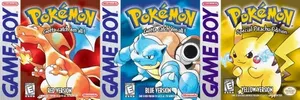
Generation I (Kanto)
The original matters, obviously, and Red and Blue still get credit for inventing the whole formula. But let's be honest: half the Pokédex is Rattata-tier filler, the level curve is broken, and Misty's gym is a puzzle only in theory. It stays high purely on historical weight and the fact that Kanto's 151 still anchor the franchise's identity.
About Generation I (Kanto)
The original Pokémon Red and Blue (and Green in Japan), released for the Game Boy, introduced the first 151 Pokémon and the entire core formula. It remains the foundation every later generation builds on.
- Platform
- Game Boy
- Pokémon introduced
- 151
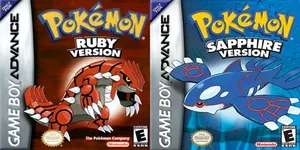
Generation III (Hoenn)
Hoenn is the generation that goes all in on weather, legendaries, and double battles, and mostly it works. Ruby and Sapphire gave us Team Aqua vs Team Magma, a genuinely fun gimmick even if the plot gets silly, and Emerald is often called the best version of a Pokémon game full stop. The abundance of water routes is the one real complaint people have, and it's a fair one.
About Generation III (Hoenn)
Ruby, Sapphire and Emerald moved the series to the Game Boy Advance, introducing double battles, weather mechanics, and the Hoenn region's volcano-and-ocean geography.
- Platform
- Game Boy Advance
- Signature feature
- Double battles, Abilities
BB Tier: Solid, dependable Pokémon
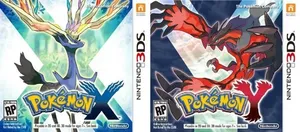
Generation VI (Kalos)
X and Y introduced full 3D models and Mega Evolution, a genuine shake-up for battling, but the story barely exists after the midpoint and Lysandre's master plan gets resolved in about ten minutes. Kalos looks gorgeous and the Fairy type fixed a real balance problem, but this generation coasts on presentation more than substance.
About Generation VI (Kalos)
X and Y brought the series into full 3D for the first time, set in the France-inspired Kalos region, and introduced Mega Evolution and the Fairy type.
- Platform
- Nintendo 3DS
- New type
- Fairy
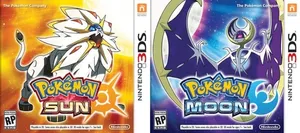
Generation VII (Alola)
Trials instead of gyms was a bold swap, and Alola's tropical, Hawaii-inspired setting is one of the most distinct in the series. Ultra Sun and Ultra Moon added more lore than anyone asked for, and the constant cutscenes slow the pace, but the regional variants (hello, Alolan Vulpix) were a genuinely clever way to breathe life into old Pokémon.
About Generation VII (Alola)
Sun and Moon replaced traditional gyms with Island Trials in the Hawaii-inspired Alola region, and introduced regional variant forms of classic Pokémon.
- Platform
- Nintendo 3DS
- Signature feature
- Regional variants, Island Trials
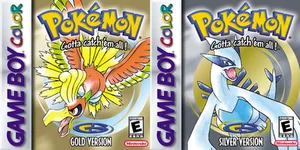
Generation II (Johto)
Gold and Silver let you replay Kanto afterward, which still feels like a small miracle of game design for the era. The day/night cycle, breeding, and held items were real steps forward, even if Johto's own story and villain team (a Team Rocket rehash) feel thinner than what came before and after it.
About Generation II (Johto)
Gold and Silver added a second region, Johto, plus a post-game trip back to Kanto. It introduced breeding, held items, and two new types: Dark and Steel.
- Platform
- Game Boy Color
- New types
- Dark, Steel
CC Tier: Divisive but defensible
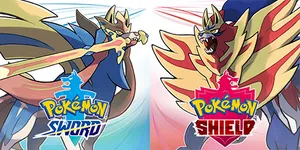
Generation VIII (Galar)
Sword and Shield cut the National Dex, a decision the fandom has never fully forgiven, and the Wild Area's open spaces felt ahead of their time but rough around the edges performance-wise. Dynamax is a fun enough gimmick for a single playthrough, but it's the generation people point to when they say the series started coasting on its reputation.
About Generation VIII (Galar)
Sword and Shield introduced the UK-inspired Galar region, the Dynamax battle gimmick, and the Wild Area, the series' first large open-ish zone.
- Platform
- Nintendo Switch
- Signature feature
- Dynamax, Wild Area
DD Tier: Held back by real problems
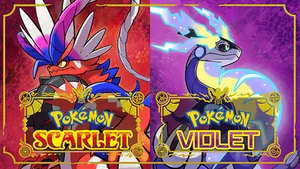
Generation IX (Paldea)
The open-world idea is the right direction for the series, and letting players tackle gyms, Titans, and Team Star in any order is genuinely exciting on paper. But Scarlet and Violet launched with frame rate drops and glitches severe enough to become their own meme, and that technical mess drags down what should've been a bigger leap forward.
About Generation IX (Paldea)
Scarlet and Violet introduced Paldea, inspired by the Iberian Peninsula, and gave the series its first fully open-world structure with no fixed route order.
- Platform
- Nintendo Switch
- Signature feature
- Open-world structure
How we ranked them
We weighed region design and atmosphere, the quality and creativity of the new Pokémon roster, story and villain team writing, quality-of-life features for the time, and how well the generation has aged according to long-running fan and critic consensus. Nostalgia counts for something, since it's a real part of why people love these games, but it doesn't override glaring flaws like padded storylines, performance issues, or a roster full of forgettable designs.
Think we got it wrong?
Drag all 9 pokémon generations into your own tier list, then download the image or share a link.
Rank these yourselfFAQ
What is the most popular Pokémon generation?
Generation I (Kanto) remains the most recognized worldwide thanks to the original 151 and the anime, but Generation IV (Sinnoh) and Generation V (Unova) often top critic and fan rankings for game quality.
Which Pokémon generation has the best story?
Generation V (Unova) is widely considered to have the strongest narrative, with Team Plasma's ideology giving the series one of its few morally complex villain arcs.
Which Pokémon generation is considered the worst?
Generation IX (Paldea) tends to rank lowest in recent consensus, mainly due to technical performance issues at launch rather than the open-world concept itself.
Is Generation III (Hoenn) overrated or underrated?
Opinions split hard here. Some fans love Hoenn's weather and double-battle focus, others find the long water routes tedious, which is why it lands solidly in the upper-middle of most rankings.
Did the generations get better over time?
Not in a straight line. Quality tends to rise and fall generation to generation depending on execution, with Generation IV and V widely seen as peak form after a stronger start in Gen I-III.
More rankings
Image credits
- Generation V (Unova)Cover: Wikipedia · Source
- Generation IV (Sinnoh)Cover: Wikipedia · Source
- Generation I (Kanto)Cover: Wikipedia · Source
- Generation III (Hoenn)Cover: Wikipedia · Source
- Generation VI (Kalos)Cover: Wikipedia · Source
- Generation VII (Alola)Cover: Wikipedia · Source
- Generation II (Johto)Cover: Wikipedia · Source
- Generation VIII (Galar)Cover: Wikipedia · Source
- Generation IX (Paldea)Cover: Wikipedia · Source