










Nintendo Consoles Tier List: Every System Ranked
Nintendo has been making hardware since before most of us were born, and that means a lot of highs, a few weird detours, and one infamous headache-machine. We're ranking all 15 of their consoles and handhelds, from the original Game & Watch to the brand new Switch 2.
This is the site's public ranking, built from what fans and critics broadly agree on across forums, retrospectives and reviews. Where the community is genuinely split, we say so and explain which way we leaned. Think we got one wrong? That's half the fun of a tier list, go argue about it.
The tier list
The community’s tier list fills in as members vote. It appears once 5 members have ranked or voted on these.
Think you can rank them better?
Make your own tier listFree account. Your ranking stays private unless you share it, and it counts toward the community tier list.Vote
SS Tier: The all-timers
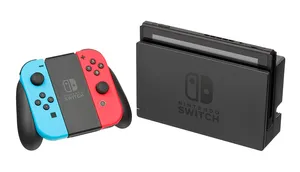
Nintendo Switch
A home console and a handheld in one box, which sounds like a gimmick until you're playing Breath of the Wild on a plane. It outsold almost everything Nintendo has ever made and somehow stayed relevant for the better part of a decade. The joy-con drift complaints are real, but the library is deep enough that nobody cares.
About Nintendo Switch
A hybrid console that functions as both a home system and a handheld, released to broad critical and commercial success.
- Released
- 2017
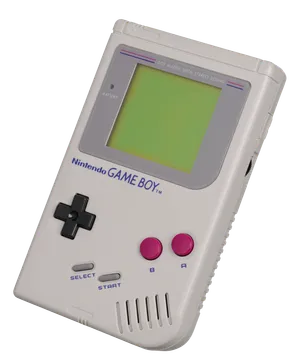
Game Boy
Grey brick, four shades of green, battery life that embarrassed its rivals. Tetris alone would have made it a legend, but Pokemon turned it into a cultural event that kids traded on playgrounds for years. It barely changed for a decade because it never needed to.
About Game Boy
A handheld built around long battery life and durability rather than raw power. It became a global phenomenon thanks to Tetris and Pokemon.
- Released
- 1989
- Notable pack-in
- Tetris
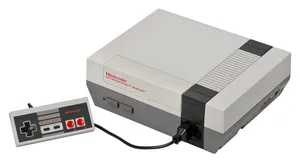
NES
The console that brought video games back from the dead after the 1983 crash, and it did it with Super Mario Bros. and a gray box shaped like a VCR. Everything about modern Nintendo, the characters, the first-party focus, the seal of quality, starts here.
About NES
The Nintendo Entertainment System relaunched home console gaming in North America after the 1983 crash. It introduced Mario, Zelda and Metroid to the world.
- Released
- 1985 (North America)
- Key franchise launched
- Super Mario Bros.
AA Tier: Excellent, no real caveats
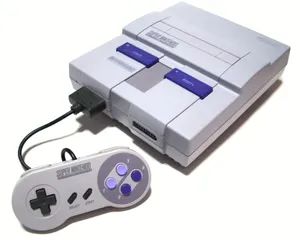
Super Nintendo
Mode 7 graphics, a controller shape everyone still copies, and a library stacked with Super Metroid, Chrono Trigger and Super Mario World. Some fans will argue all day about SNES versus Genesis, but the sheer density of genuine classics here is hard to match.
About Super Nintendo
The SNES was Nintendo's answer to Sega's Genesis, competing in the 16-bit console wars of the early 1990s. It's remembered for a stacked library of RPGs and platformers.
- Released
- 1991 (North America)
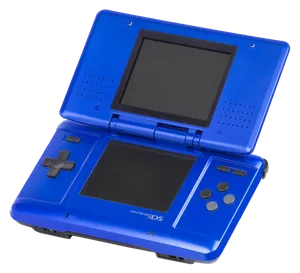
Nintendo DS
Two screens looked ridiculous on paper and then Nintendogs and Brain Age turned it into a system your grandma owned too. Backwards compatible with Game Boy Advance carts, which made it an easy upgrade, and the DS Lite redesign is still one of the best-looking handhelds ever made.
About Nintendo DS
A dual-screen handheld with touchscreen and microphone input, aimed at reaching casual and non-traditional gamers alongside the core audience.
- Released
- 2004
- Notable feature
- Dual screens, one touch-enabled
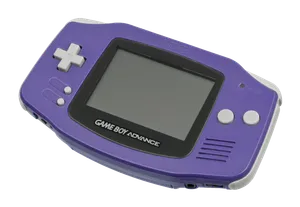
Game Boy Advance
Basically a SNES you could put in your pocket, which is an insane upgrade over the original Game Boy's green screen. Metroid Fusion, Fire Emblem's western debut and a pile of excellent remakes made this the quiet MVP of the early 2000s.
About Game Boy Advance
A more powerful handheld capable of near-SNES level graphics, with a horizontal design and a huge library of original titles and remakes.
- Released
- 2001
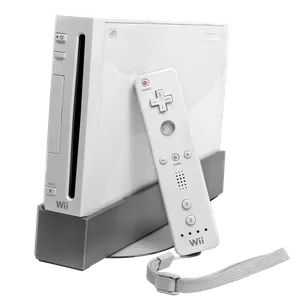
Wii
Motion controls got Nintendo into living rooms that had never owned a console before, and Wii Sports became the thing everyone's parents played at family gatherings. Critics can knock the waggle gimmick, but it sold over 100 million units and the library still has Galaxy and Twilight Princess.
About Wii
A home console built around motion controls via the Wii Remote, designed to appeal beyond the traditional gaming audience.
- Released
- 2006
- Notable title
- Wii Sports
BB Tier: Really good, with an asterisk
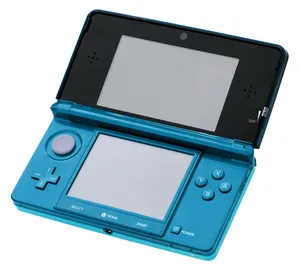
Nintendo 3DS
The glasses-free 3D effect was mostly a novelty people turned off within a week, but strip that away and you've got Ocarina of Time remade, Animal Crossing: New Leaf, and a genuinely excellent Pokemon run. It took a rocky launch and a big price cut to find its footing.
About Nintendo 3DS
A handheld successor to the DS that added autostereoscopic 3D visuals viewable without glasses, alongside a large backward-compatible library.
- Released
- 2011
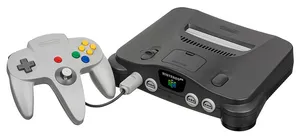
Nintendo 64
Ocarina of Time and Mario 64 basically invented modern 3D gaming, and the four-controller-port couch multiplayer scene (GoldenEye, Mario Kart, Smash Bros.) is still talked about with real nostalgia. The cartridge format held back third-party support and the library is thinner than people remember outside the hits.
About Nintendo 64
Nintendo's cartridge-based entry into the 3D gaming era, known for popularizing analog-stick 3D platformers and local multiplayer party games.
- Released
- 1996
- Format
- Cartridge
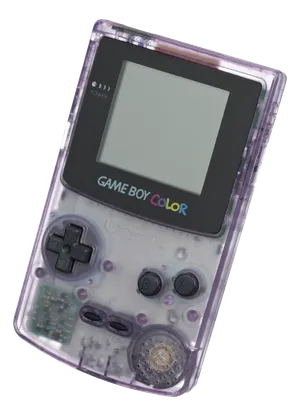
Game Boy Color
Not a huge leap, just the Game Boy with color and a slightly faster chip, but Pokemon Gold and Silver alone justify its existence. It's an easy system to undersell because it lived in the shadow of the handheld before and after it.
About Game Boy Color
A redesigned, backward-compatible successor to the original Game Boy that added a color screen. It bridged the gap between the original handheld and the GBA.
- Released
- 1998
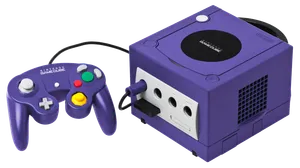
GameCube
That purple lunchbox shape got mocked constantly, and the tiny discs scared off third parties worried about storage, but Melee, Wind Waker and Metroid Prime are stone-cold classics. Fans are genuinely split on where this one lands, some call it an underrated gem, others call it Nintendo's most commercially disappointing era.
About GameCube
Nintendo's sixth-generation home console, known for its compact disc format, purple cube shape, and a library heavy on first-party classics.
- Released
- 2001
- Format
- Mini-DVD-based discs
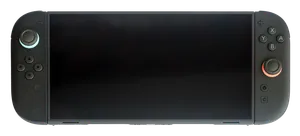
Nintendo Switch 2
Still early days for this one, but a bigger screen, better performance and backward compatibility with the original Switch's library make it a safe, sensible upgrade rather than a reinvention. Fair or not, it's judged against a predecessor that became one of the best-selling consoles ever, and that's a tough act to follow.
About Nintendo Switch 2
The successor to the Nintendo Switch, offering upgraded hardware performance and backward compatibility with the original console's game library.
CC Tier: Fine, flawed, or just forgettable
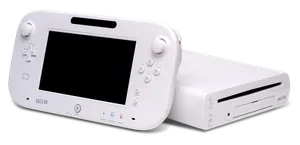
Wii U
A genuinely clever idea, a second screen built into the controller, buried under confusing marketing that left shoppers thinking it was a Wii accessory rather than a new console. Breath of the Wild and Mario Kart 8 are great, but most people only played them later on Switch anyway.
About Wii U
Nintendo's follow-up to the Wii, featuring a tablet-like controller with its own screen. It struggled commercially due to unclear marketing about what the console actually was.
- Released
- 2012
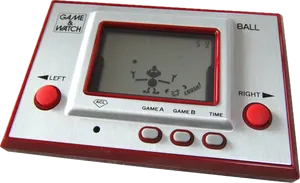
Game & Watch
The handheld line that started it all back in the early 1980s, with simple LCD games like Ball and Donkey Kong squeezed into a calculator-sized shell. Historically it's hugely important, but judged purely as a plaything against everything that came after, it's charmingly limited.
About Game & Watch
Nintendo's early 1980s line of single-game handheld LCD devices, created by designer Gunpei Yokoi. It helped establish Nintendo as a major player in portable electronics before the NES existed.
- First released
- 1980
- Creator
- Gunpei Yokoi
FF Tier: The cautionary tale
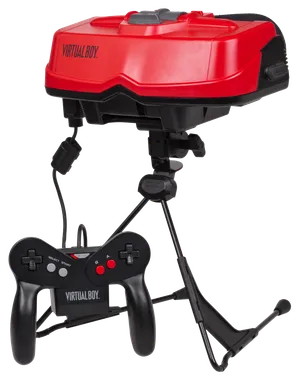
Virtual Boy
A headache machine that showed everything in red and black and gave players actual eye strain warnings in the manual. It lasted less than a year on shelves before Nintendo quietly buried it, and it remains the system even diehard fans bring up as the one real misstep.
About Virtual Boy
A tabletop 3D gaming system that displayed games only in red and black. It flopped commercially and was discontinued within a year of release.
- Released
- 1995
- Creator
- Gunpei Yokoi
How we ranked them
We weighed the games (the real reason anyone buys a Nintendo system), the hardware's innovation and reliability, how well each system sold and aged, and the sheer joy-to-frustration ratio of actually owning one. Sales numbers matter, but a cult favorite with killer games can still outrank a bestseller that nobody talks about anymore. Consensus from fan communities and critics drove most placements, with our own call made where opinions genuinely diverge.
Think we got it wrong?
Drag all 15 nintendo consoles into your own tier list, then download the image or share a link.
Rank these yourselfFAQ
What is the best Nintendo console of all time?
Most fans and critics point to the NES, Game Boy, or Switch as the top contenders, depending on whether you weigh historical impact, sales, or sheer game library size.
What is the worst Nintendo console?
The Virtual Boy is the near-universal pick for Nintendo's biggest misfire, thanks to its uncomfortable red-and-black display and short shelf life.
Is the GameCube underrated?
A lot of fans think so. It sold modestly compared to its rivals but has one of the most beloved game libraries of any Nintendo system, including Melee and Wind Waker.
Was the Wii U really that bad?
It wasn't a bad console so much as a badly explained one. Many of its best games, like Breath of the Wild, later got rereleased on Switch, which overshadowed the original Wii U versions.
How does the Switch 2 compare to the original Switch?
It's an iterative upgrade with better performance and backward compatibility rather than a dramatic reinvention, so early impressions are positive but more measured than the reception the original Switch got.
More rankings
Image credits
- Nintendo SwitchPhoto: Evan-Amos, Public domain (Wikimedia Commons) · Source
- Game BoyPhoto: Transfrom JPEG version and remove white background. Original by Evan-Amos., Public domain (Wikimedia Commons) · Source
- NESPhoto: Evan-Amos, Public domain (Wikimedia Commons) · Source
- Super NintendoPhoto: Muband at Japanese Wikipedia, CC BY-SA 3.0 (Wikimedia Commons) · License · Source
- Nintendo DSPhoto: Evan-Amos, Public domain (Wikimedia Commons) · Source
- Game Boy AdvancePhoto: Evan-Amos, Public domain (Wikimedia Commons) · Source
- WiiPhoto: Evan-Amos, Public domain (Wikimedia Commons) · Source
- Nintendo 3DSPhoto: Evan-Amos, Public domain (Wikimedia Commons) · Source
- Nintendo 64Photo: Evan-Amos, Public domain (Wikimedia Commons) · Source
- Game Boy ColorPhoto: Evan-Amos, modified by Gunnar.offel, Public domain (Wikimedia Commons) · Source
- GameCubePhoto: Evan-Amos, Public domain (Wikimedia Commons) · Source
- Nintendo Switch 2Photo: Crisco 1492, CC BY-SA 4.0 (Wikimedia Commons) · License · Source
- Wii UPhoto: Takimata (edited by:Tokyoship), CC BY-SA 3.0 (Wikimedia Commons) · License · Source
- Game & WatchPhoto: masatsu, CC BY-SA 2.0 (Wikimedia Commons) · License · Source
- Virtual BoyPhoto: Evan-Amos, Public domain (Wikimedia Commons) · Source