






Final Fantasy Games Tier List: Every Mainline Entry Ranked
Thirty-plus years, 21 games, and roughly a thousand arguments about which one actually deserves the crown. We're ranking every mainline Final Fantasy, its direct sequels, and the biggest spinoffs that fans treat as essential: Tactics, Crisis Core, and Dissidia.
This list is built on where the fandom and critics actually land, not just nostalgia for whichever one you played first. Some placements will make people mad. Good. That's the point of a tier list. Rank it yourself in your head as you read, you probably already disagree with something in the S tier.
The tier list
The community’s tier list fills in as members vote. It appears once 5 members have ranked or voted on these.
Think you can rank them better?
Make your own tier listFree account. Your ranking stays private unless you share it, and it counts toward the community tier list.Vote
SS Tier: The ones that define the series
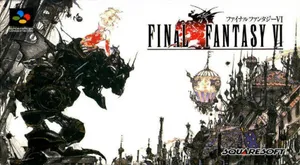
Final Fantasy VI
Kefka remains the series' best villain precisely because he's not brooding, he's gleeful about ending the world. A cast of fourteen playable characters shouldn't work this well, but the opera house scene alone proves Square had figured out how to make a 16-bit game feel like an opera.
About Final Fantasy VI
Widely cited as the peak of the 16-bit era entries, led by the villain Kefka and an ensemble cast of over a dozen playable characters.
- Platform
- SNES
- Released
- 1994
Final Fantasy VII
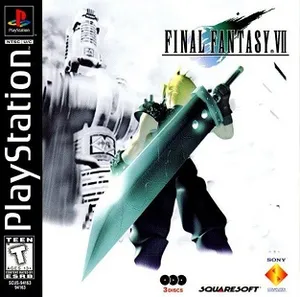
The game that made the rest of the world pay attention to JRPGs. Midgar's slums, the Shinra elevator, that scene with Aerith, all of it still gets referenced constantly almost thirty years later. The blocky polygon models have aged badly, the story's ambition has not.
About Final Fantasy VII
The PlayStation entry that brought Final Fantasy global mainstream attention, following Cloud Strife and eco-terrorist group AVALANCHE against the Shinra Corporation.
- Platform
- PlayStation
- Released
- 1997
Final Fantasy IX
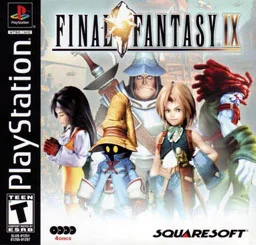
A love letter to everything that came before it, crystals and chocobos and Vivi's quiet existential dread included. Zidane's crew feels like an actual found family, and the game's willingness to be funny and sad in the same scene is still unmatched in the series.
About Final Fantasy IX
A deliberate return to the series' medieval fantasy roots after VII and VIII's sci-fi leanings, starring thief Zidane Tribal.
- Platform
- PlayStation
Final Fantasy X
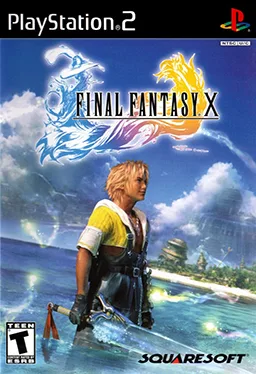
Blitzball is divisive, Tidus's laugh is a meme, but the Spira pilgrimage and Yuna's arc hit harder than almost anything else Square has made. Voice acting was new for the series in 2001, and the stiffness shows, yet the ending still wrecks people.
About Final Fantasy X
The first entry with voice acting and full 3D environments, following summoner Yuna's pilgrimage across the world of Spira.
- Platform
- PlayStation 2
- Released
- 2001
Final Fantasy Tactics
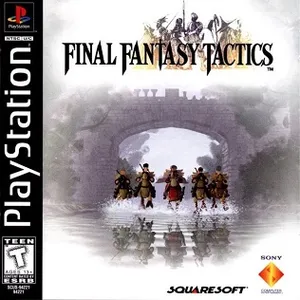
Ramza's story of class war and religious conspiracy in Ivalice is denser and darker than most mainline entries. The job system here is the blueprint half the tactics genre still copies, and Delita remains one of the most quietly ruthless characters in gaming.
About Final Fantasy Tactics
A tactical RPG spinoff set in Ivalice, following soldier Ramza Beoulve through a war-torn political conspiracy.
- Platform
- PlayStation
- Genre
- Tactical RPG
AA Tier: Excellent, no real excuses needed
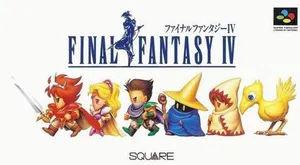
Final Fantasy IV
The one that introduced the Active Time Battle system and actually gave its cast arcs instead of just stats. Cecil's redemption from dark knight to paladin set the template for every brooding FF protagonist that followed him.
About Final Fantasy IV
Introduced the Active Time Battle system and a more emotionally driven story following dark knight Cecil. Known in its original US release as Final Fantasy II.
- Platform
- SNES
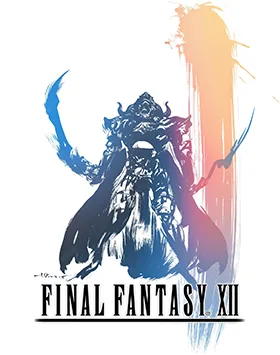
Final Fantasy XII
Ivalice again, but this time it's a sprawling political drama with the Gambit system letting you basically program your party's AI. Balthier alone is worth the price of admission, sky pirate charisma the series rarely bothers with elsewhere.
About Final Fantasy XII
Set in Ivalice, known for its Gambit AI system and a more politically driven story around the kingdom of Dalmasca.
- Platform
- PlayStation 2
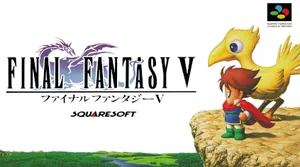
Final Fantasy V
Often slept on because it never got the fanfare of VI or VII, but the job system here is the most flexible in the whole series. If you want to beat the final boss with four black mages, go ahead, the game lets you.
About Final Fantasy V
Famous for its deep job system, letting players mix and match abilities across classes. Didn't see an official Western release until years after Japan.
- Platform
- SNES
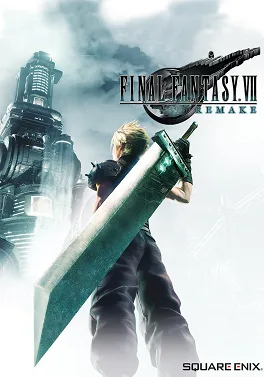
Final Fantasy VII Remake
Taking one disc's worth of Midgar and turning it into a full game was a gamble that mostly paid off. The combat reinvents turn-based ATB as something closer to action, even if the Whispers subplot split the fanbase right down the middle.
About Final Fantasy VII Remake
A full reimagining of VII's Midgar section as a standalone game, blending real-time action combat with series-style abilities.
- Platform
- PlayStation 4
- Released
- 2020
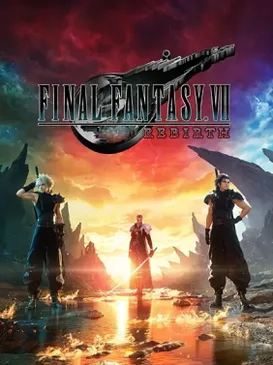
Final Fantasy VII Rebirth
The open world sections run long and the minigame count borders on excessive, but the character work, especially around Aerith, is some of the best the series has ever done. Shows real confidence in letting a remake diverge from its source.
About Final Fantasy VII Rebirth
The second part of the VII Remake project, expanding past Midgar into an open-world continuation of the story.
- Platform
- PlayStation 5
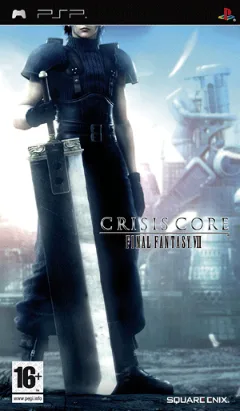
Crisis Core: Final Fantasy VII
Zack Fair deserved better than being a footnote in the original VII, and this gives him a full tragic arc that recontextualizes the whole original game. The DMW slot machine combat mechanic is a little goofy, but the ending still lands like a gut punch.
About Crisis Core: Final Fantasy VII
A prequel following Zack Fair, a SOLDIER operative whose story directly sets up the events of the original Final Fantasy VII.
- Platform
- PSP
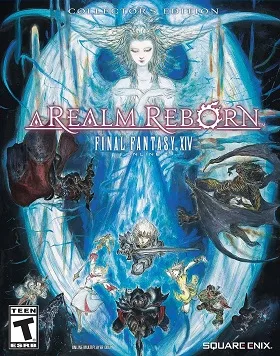
Final Fantasy XIV
A famously disastrous launch that got rebuilt from the ground up into one of the best MMOs ever made. The Shadowbringers expansion is frequently brought up as some of the best storytelling in the whole franchise, mainline or not.
About Final Fantasy XIV
The series' second MMORPG, relaunched as A Realm Reborn after a widely criticized 2010 original version.
- Genre
- MMORPG
- Relaunch
- A Realm Reborn, 2013
BB Tier: Very good with a real asterisk or two
Final Fantasy III
The job system makes its series debut here and it's genuinely foundational, but the NES original (and even the DS remake) asks a lot of patience with its brutal difficulty and anonymous cast. Important historically, tough to love today.
About Final Fantasy III
Introduced the job system that would define much of the series going forward. Originally NES-only in Japan until a DS remake brought it west.
- Original platform
- NES
- Western release
- DS remake
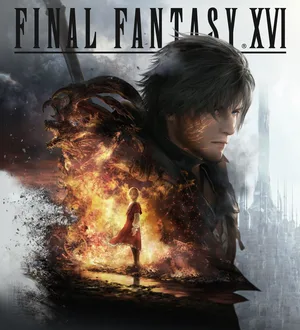
Final Fantasy XVI
Clive's revenge story leans hard into Devil May Cry style action, trading party-based strategy for solo combos and giant Eikon battles that look incredible. Fans are split on losing the classic party dynamic, and that split is fair.
About Final Fantasy XVI
An action-combat-focused entry following Clive Rosfield, built around large-scale battles between summoned Eikons.
- Platform
- PlayStation 5
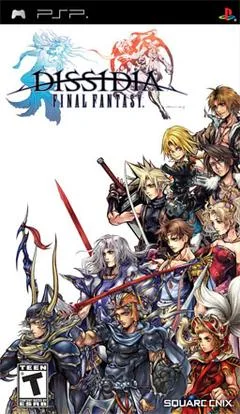
Dissidia Final Fantasy
A fighting game fan-service crossover that lets Cloud punch Sephiroth while Cosmos and Chaos argue about the universe. It's not deep, but watching every era of the series collide in one arena is exactly the kind of nonsense fans wanted.
About Dissidia Final Fantasy
A crossover fighting game pulling protagonists and villains from across the mainline series into one arena-style battle.
- Platform
- PSP
- Genre
- Fighting game
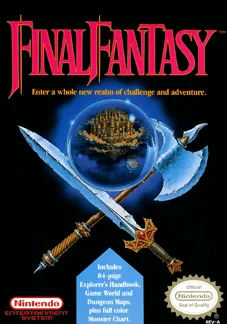
Final Fantasy
The original 1987 game that started all of this deserves respect just for existing, and the Four Warriors of Light setup is charmingly simple. Playing it today without a remake's quality-of-life fixes is rough, but its DNA is in every entry after it.
About Final Fantasy
The game that launched the entire franchise in 1987 for the NES, sending four Warriors of Light to restore four elemental crystals.
- Released
- 1987
- Platform
- NES
CC Tier: Divisive but defensible
Final Fantasy XI
The series' first MMO proved Square could do online worlds, but its party-dependent, grind-heavy design has aged into something only longtime subscribers really defend.
About Final Fantasy XI
The series' first MMORPG, launched originally on PlayStation 2 and PC before later platforms.
- Genre
- MMORPG
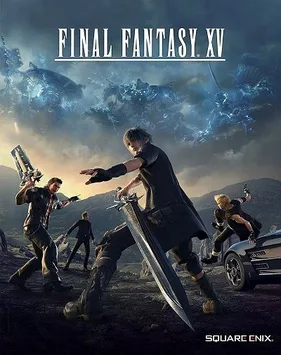
Final Fantasy XV
A road trip with the boys has real charm, and Noctis's crew bickering over car snacks is some of the series' best character chemistry. The story itself feels unfinished, leaning hard on DLC and a movie to fill plot holes that should've been in the base game.
About Final Fantasy XV
An open-world action RPG following prince Noctis and his three companions on a road trip turned war of succession.
- Platform
- PlayStation 4 / Xbox One
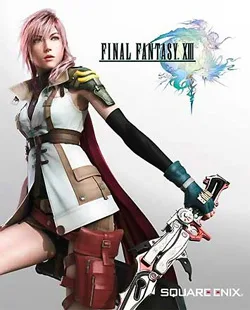
Final Fantasy XIII
Gorgeous to look at, and the Paradigm Shift combat system is faster and smarter than people give it credit for. The corridor-shaped first act and a plot thick with invented proper nouns (l'Cie, fal'Cie, Cocoon) make it a genuine barrier to entry.
About Final Fantasy XIII
A linear, visually ambitious entry centered on l'Cie characters marked by crystal power, starting a trilogy of sequels.
- Platform
- PlayStation 3 / Xbox 360
DD Tier: Rough going, for completionists mostly
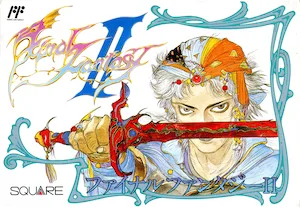
Final Fantasy II
An experiment in stat-growth-by-use that sounded clever on paper and plays like a grind in practice. Leveling up your weapons by hitting your own allies with them is the kind of design quirk people bring up more as a joke than a recommendation.
About Final Fantasy II
The 1988 follow-up known for ditching traditional leveling in favor of a skill-use growth system. Later remade and re-released on multiple platforms.
- Released
- 1988
FF Tier: Hard to recommend even to fans
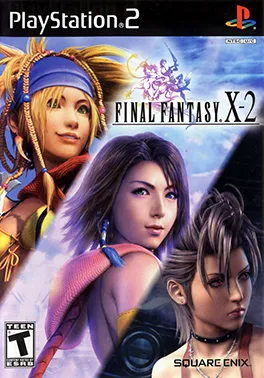
Final Fantasy X-2
Dressing Yuna, Rikku, and Paine up as a J-pop girl group and sending them on a treasure hunt is a tonal 180 from X that still baffles people. The job-change Dressphere system has fans, but as a sequel to one of the series' saddest stories, it's a weird fit.
About Final Fantasy X-2
A direct sequel to X, starring Yuna, Rikku, and Paine as treasure hunters with a job-based Dressphere system.
- Platform
- PlayStation 2
How we ranked them
We weighed critical reception at launch, how each game holds up now, its influence on the series and RPGs in general, and how consistently fans bring it up when they talk about the "best" Final Fantasy. Spinoffs were judged against other spinoffs as much as against the mainline games. Where the fanbase is genuinely split (looking at you, VIII, Lightning Saga folks, and the MMO crowd), we made a call and explained why.
Think we got it wrong?
Drag all 21 final fantasy games into your own tier list, then download the image or share a link.
Rank these yourselfFAQ
What is the best Final Fantasy game according to fans?
Final Fantasy VI, VII, IX, and X are the names that come up most often in "best FF" debates, with VII usually winning name recognition and VI winning over longtime series purists.
What is the worst Final Fantasy game?
Final Fantasy X-2 and Final Fantasy II are the two most commonly cited as the weakest entries, though both have defenders who point to their experimental systems.
Is Final Fantasy XIV worth playing in 2025?
Yes. After a troubled 2010 launch it was rebuilt as A Realm Reborn and has become one of the most praised MMOs around, especially its Shadowbringers and Endwalker expansions.
Should I play Final Fantasy VII Remake before Rebirth?
Yes, Rebirth continues directly from Remake's story and expects you to know its characters and the Whispers subplot.
Is Final Fantasy Tactics connected to the mainline games?
It's a spinoff set in the Ivalice world, shared loosely with Final Fantasy XII, rather than a numbered mainline entry, but it's widely considered one of the series' best games regardless.
Do the Final Fantasy games have a connected story?
No, almost every numbered entry is a standalone story with its own cast and world. Final Fantasy X-2 is the rare direct sequel, and XIII got two sequels of its own.
More rankings
Image credits
- Final Fantasy VICover: Wikipedia · Source
- Final Fantasy VIICover: Wikipedia · Source
- Final Fantasy IXCover: Wikipedia · Source
- Final Fantasy XCover: Wikipedia · Source
- Final Fantasy TacticsCover: Wikipedia · Source
- Final Fantasy IVCover: Wikipedia · Source
- Final Fantasy XIICover: Wikipedia · Source
- Final Fantasy VCover: Wikipedia · Source
- Final Fantasy VII RemakeCover: Wikipedia · Source
- Final Fantasy VII RebirthCover: Wikipedia · Source
- Crisis Core: Final Fantasy VIICover: Wikipedia · Source
- Final Fantasy XIVCover: Wikipedia · Source
- Final Fantasy IIICover: Wikipedia · Source
- Final Fantasy XVICover: Wikipedia · Source
- Dissidia Final FantasyCover: Wikipedia · Source
- Final FantasyCover: Wikipedia · Source
- Final Fantasy XICover: Wikipedia · Source
- Final Fantasy XVCover: Wikipedia · Source
- Final Fantasy XIIICover: Wikipedia · Source
- Final Fantasy IICover: Wikipedia · Source
- Final Fantasy X-2Cover: Wikipedia · Source