









Classic Movie Monsters Tier List: Every Icon Ranked
Fourteen monsters, nearly a century of nightmares. We're ranking the classic movie monsters that built horror and giant-monster cinema as we know it, from Universal's Dracula and his castle full of cousins to the atomic-age beasts like Godzilla and Mothra.
The list leans on what fans and critics keep saying across reviews, retrospectives and forum arguments, with our own call where the debate never settles. Think we buried your favorite? That's what the comments are for.
The tier list
The community’s tier list fills in as members vote. It appears once 5 members have ranked or voted on these.
Think you can rank them better?
Make your own tier listFree account. Your ranking stays private unless you share it, and it counts toward the community tier list.Vote
SS Tier: The ones who built the genre
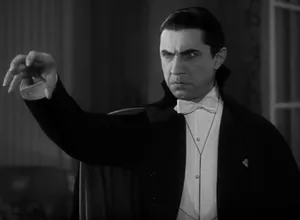
Dracula
Bela Lugosi's accent and cape basically invented how pop culture thinks a vampire should sound and move. Every brooding bloodsucker since, from Lestat to Edward Cullen, is arguing with or copying this performance.
About Dracula
A vampire count from Bram Stoker's 1897 novel, brought to iconic film life by Bela Lugosi in Universal's 1931 adaptation. Known for the Transylvanian accent, the cape, and setting the template for vampire cinema.
- First major film
- 1931
- Studio
- Universal
- Actor
- Bela Lugosi
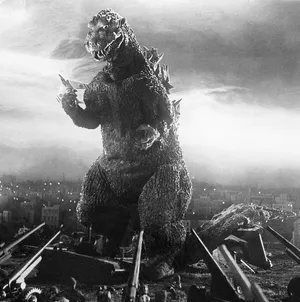
Godzilla
Started in 1954 as a walking metaphor for nuclear devastation and somehow also became a guy who fights space dragons and giant moths. That range, from genuine dread to blockbuster spectacle, is why no other giant monster has matched his run.
About Godzilla
A giant prehistoric sea monster awakened and mutated by nuclear testing, first appearing in Japan's 1954 film Gojira. Became a long-running franchise icon for Toho studios.
- Release
- 1954
- Studio
- Toho
- Origin
- Japan
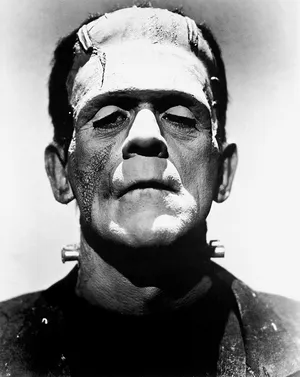
Frankenstein's Monster
Boris Karloff's flat head and neck bolts are shorthand for "monster" even to people who've never seen the film. What makes him stick is the sympathy underneath the makeup, a creature who never asked to exist and gets hunted for it anyway.
About Frankenstein's Monster
The creature assembled from corpses and reanimated by Victor Frankenstein, originating in Mary Shelley's 1818 novel. Boris Karloff's 1931 portrayal defined the character's look and sympathetic lumbering presence on film.
- First major film
- 1931
- Studio
- Universal
- Actor
- Boris Karloff
AA Tier: Legends in their own right
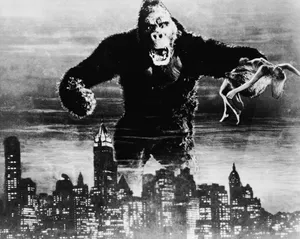
King Kong
A giant ape on top of the Empire State Building is one of the defining images of 20th century film. He's less scary than tragic, which is probably why the story keeps getting remade instead of forgotten.
About King Kong
A giant ape discovered on a remote island and brought to New York City, star of the 1933 film King Kong. Famous for the climactic scene atop the Empire State Building.
- Release
- 1933
- Studio
- RKO
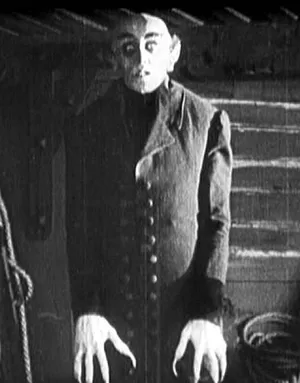
Count Orlok
Max Schreck's rat-faced Nosferatu is the version that actually looks like a monster instead of a seductive aristocrat. Decades before Dracula got cool, Orlok proved vampires could just be nightmare fuel, and the design still gets copied in horror today.
About Count Orlok
The vampire antagonist of F.W. Murnau's 1922 German silent film Nosferatu, played by Max Schreck. An unauthorized adaptation of Dracula, with a rat-like design distinct from later, more suave vampires.
- Release
- 1922
- Actor
- Max Schreck
- Origin
- Germany
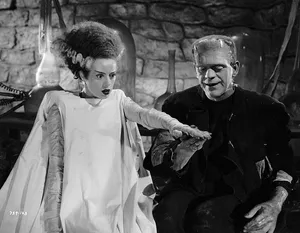
Bride of Frankenstein
Onscreen for only a few minutes, Elsa Lanchester's hissing, lightning-bolt-haired bride still outshines most monsters with double her screen time. The film around her is also the rare sequel that fans and critics agree beats the original.
About Bride of Frankenstein
The companion created for the Monster in Universal's 1935 sequel to Frankenstein, played by Elsa Lanchester. Famous for her streaked, upswept hairstyle and brief but unforgettable screen time.
- Release
- 1935
- Studio
- Universal
- Actor
- Elsa Lanchester
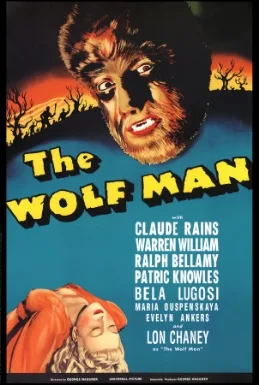
The Wolf Man
Lon Chaney Jr. gave horror its most human monster: a regular guy cursed to hurt the people he loves once a month. The pentagram-in-the-palm lore and the tragic "even a man who is pure in heart" poem stuck around longer than most monster rules ever do.
About The Wolf Man
A cursed man who transforms into a wolf-like beast under the full moon, played by Lon Chaney Jr. in Universal's 1941 film. The movie's folklore, much of it invented for the screen, became standard werewolf lore.
- Release
- 1941
- Studio
- Universal
- Actor
- Lon Chaney Jr.
BB Tier: Beloved, just a step behind
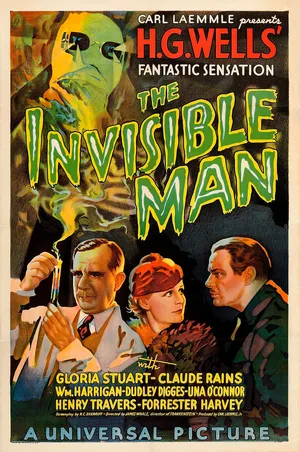
The Invisible Man
Claude Rains spends most of the movie as a voice and some unwrapped bandages, which is exactly the point, the unraveling sanity is the scary part, not the body horror. It's a smart premise that doesn't always get the credit it deserves next to the louder monsters.
About The Invisible Man
A scientist who discovers invisibility and descends into violent madness, based on H.G. Wells' 1897 novel. Claude Rains starred in Universal's 1933 film adaptation.
- Release
- 1933
- Studio
- Universal
- Actor
- Claude Rains
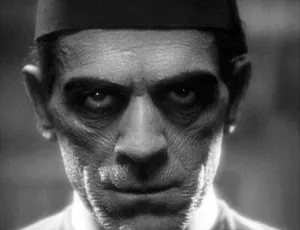
The Mummy
Imhotep trades jump scares for slow-burn dread and genuine heartbreak over a lost love he's willing to wait centuries for. He's a little overshadowed today by his own franchise's lesser sequels and reboots, which is a shame for the original.
About The Mummy
Ancient Egyptian priest Imhotep, reawakened in the modern world and searching for his reincarnated love. Boris Karloff played the role in Universal's 1932 film.
- Release
- 1932
- Studio
- Universal
- Actor
- Boris Karloff
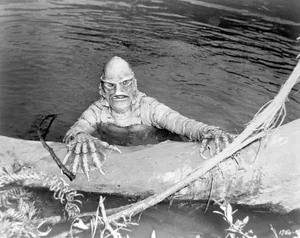
Creature from the Black Lagoon
Gill-man is the last of the classic Universal monsters and arguably the best practical suit of the bunch. He gets docked slightly for being more spectacle than character, a monster you remember for the lagoon, not the lines.
About Creature from the Black Lagoon
An amphibious humanoid discovered in the Amazon, star of Universal's 1954 3D horror film. Often called the last of the classic Universal monsters.
- Release
- 1954
- Studio
- Universal
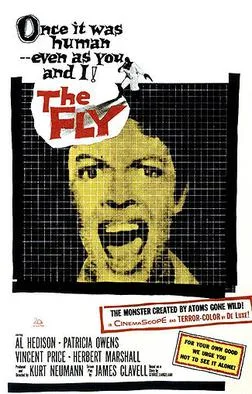
The Fly
The original's "help me" ending is one of horror's best gut-punches, even if most people now picture Jeff Goldblum's gloriously gross 1986 remake instead. Splitting fan loyalty between two eras keeps it just out of the top tier here.
About The Fly
A scientist whose teleportation experiment goes wrong, fusing him with a housefly, from the 1958 film The Fly. Remade in 1986 with Jeff Goldblum in a version many fans prefer.
- Release
- 1958
- Remake
- 1986
CC Tier: Fun but a little niche
Mothra
A giant moth guarded by tiny twin singing fairies sounds ridiculous on paper and is ridiculous on screen, in the best way. She's beloved in the Godzilla universe specifically but doesn't carry much weight as a standalone monster outside it.
About Mothra
A giant moth deity from Toho's kaiju franchise, first appearing in 1961's Mothra and later as a recurring figure in the Godzilla series. Known for its twin fairy attendants, the Shobijin.
- First film
- 1961
- Studio
- Toho
- Origin
- Japan
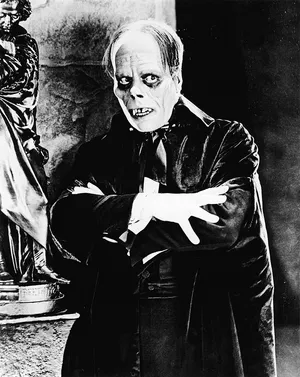
The Phantom of the Opera
Lon Chaney's unmasking scene is genuinely one of silent horror's great shocks, but the Phantom is more tragic romantic than monster, closer to Jekyll and Hyde territory than Dracula's. Fans argue over whether he belongs on monster lists at all, and we get why.
About The Phantom of the Opera
A disfigured, masked figure haunting the Paris Opera House, based on Gaston Leroux's 1910 novel. Lon Chaney's 1925 silent film portrayal is best known for its shocking unmasking scene.
- Release
- 1925
- Actor
- Lon Chaney
DD Tier: More gimmick than monster
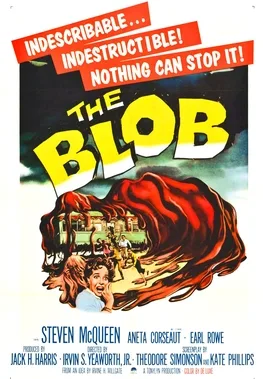
The Blob
A sentient pile of red jelly that oozes through a movie theater is a fun image for about five minutes. It's a solid B-movie mascot but it has no face, no voice and basically no personality, which caps how high a monster can climb.
About The Blob
A gelatinous, ever-growing alien organism that consumes everything in its path, star of the 1958 American horror film The Blob. Known for its simple but effective creeping menace.
- Release
- 1958
- Origin
- United States
How we ranked them
We weighed cultural staying power, how much each monster actually shaped its genre, the quality of its best film appearances, and how well the character (or creature design) still holds up today. Pure nostalgia wasn't enough on its own; a monster had to earn its spot by influencing what came after it.
Think we got it wrong?
Drag all 14 classic movie monsters into your own tier list, then download the image or share a link.
Rank these yourselfFAQ
What makes a monster a "classic" movie monster?
Generally it means the character comes from early-to-mid 20th century horror, especially the Universal Classic Monsters era of the 1920s-1950s, or the atomic-age giant monster films that followed in Japan and the US.
Is Count Orlok the same as Dracula?
No. Orlok is the vampire from Nosferatu (1922), an unauthorized, unofficial adaptation of Bram Stoker's novel, so the names and some details were changed to avoid copyright issues.
Why is Godzilla ranked above King Kong?
Both are titans of giant-monster cinema, but Godzilla's filmography is longer and more varied, swinging from serious nuclear allegory to pure blockbuster fun, which gives him the edge in most critic and fan rankings.
Why isn't the Phantom of the Opera ranked higher?
He's iconic, but a lot of fans debate whether he counts as a true monster versus a tragic, disfigured villain closer to a gothic romance antagonist. We ranked him accordingly.
Which classic monster has the saddest story?
The Wolf Man and Frankenstein's Monster are the two most commonly cited as genuinely tragic figures, cursed or created without ever choosing the horror they end up causing.
More rankings
Image credits
- DraculaPhoto: Screenshot from "Internet Archive" of the movie Dracula (1931), Public domain (Wikimedia Commons) · Source
- GodzillaPhoto: Toho Company Ltd., Public domain (Wikimedia Commons) · Source
- Frankenstein's MonsterPhoto: Universal Studios, NBCUniversal, Public domain (Wikimedia Commons) · Source
- King KongPhoto: en:Warner Bros. currently owns the rights to the 1933 version of "King Kong", following the demise of RKO in 1959., Public domain (Wikimedia Commons) · Source
- Count OrlokPhoto: F. W. Murnau, Public domain (Wikimedia Commons) · Source
- Bride of FrankensteinPhoto: Universal Pictures, Public domain (Wikimedia Commons) · Source
- The Wolf ManCover: Wikipedia · Source
- The Invisible ManPhoto: Karoly Grosz, Public domain (Wikimedia Commons) · Source
- The MummyPhoto: Trailer screenshot, from DVD The Mummy, Universal 2004, Public domain (Wikimedia Commons) · Source
- Creature from the Black LagoonPhoto: Florida Memory, Public domain (Wikimedia Commons) · Source
- The FlyCover: Wikipedia · Source
- MothraPhoto: Toho, Public domain (Wikimedia Commons) · Source
- The Phantom of the OperaPhoto: Movie still scan, Public domain (Wikimedia Commons) · Source
- The BlobCover: Wikipedia · Source