









Best Zelda Games Ranked
Thirty-plus years of Hyrule, and somehow the arguments never get old. We pulled together forums, review scores, and our own hours with a Master Sword in hand to rank all 20 mainline and portable Zelda games, from the NES original to the most recent handheld and Switch entries.
This isn't a list built to be safe. Some beloved games land lower than fans expect, and a couple of "lesser" entries get more credit than they usually receive. Disagree? That's half the fun of a Zelda list... go ahead and make your own case.
The list
- 1
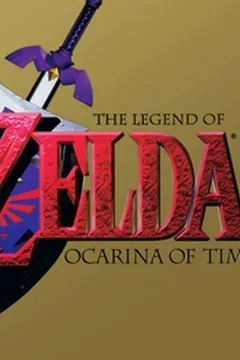 The Legend of Zelda: Ocarina of Time
- 2
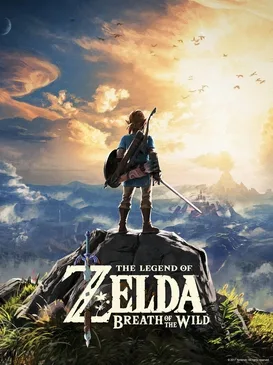 The Legend of Zelda: Breath of the Wild
- 3
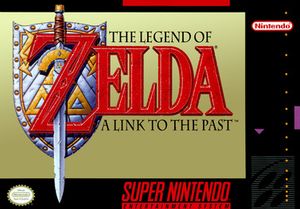 The Legend of Zelda: A Link to the Past
- 4
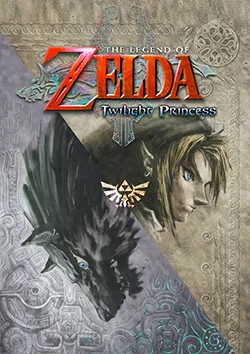 The Legend of Zelda: Twilight Princess
- 5
 The Legend of Zelda: The Wind Waker
- 6
 The Legend of Zelda: Majora's Mask
- 7
 The Legend of Zelda: Link's Awakening
- 8
 The Legend of Zelda: Skyward Sword
- 9
 The Legend of Zelda: A Link Between Worlds
- 10
 The Legend of Zelda: Tears of the Kingdom
- 11
 The Legend of Zelda: Four Swords Adventures
- 12
 The Legend of Zelda: The Minish Cap
- 13
 The Legend of Zelda: Phantom Hourglass
- 14
 The Legend of Zelda: Spirit Tracks
- 15
 The Legend of Zelda: Oracle of Seasons
- 16
 The Legend of Zelda: Oracle of Ages
- 17
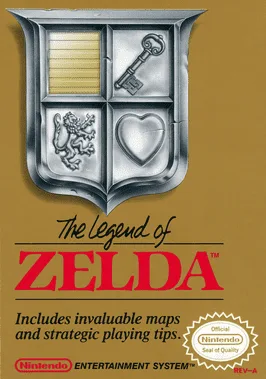 The Legend of Zelda
- 18
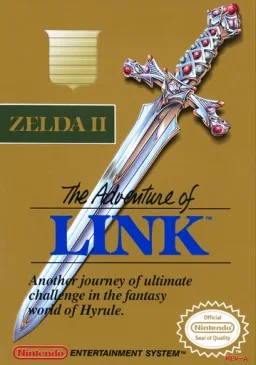 The Legend of Zelda II: The Adventure of Link
- 19
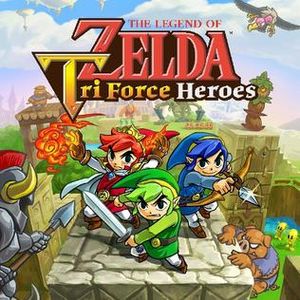 The Legend of Zelda: Tri Force Heroes
- 20
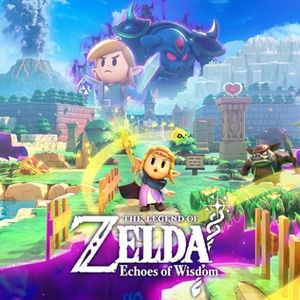 The Legend of Zelda: Echoes of Wisdom
The community’s list fills in as members vote. It appears once 5 members have ranked or voted on these.
Think you can rank them better?
Make your own listFree account. Your ranking stays private unless you share it, and it counts toward the community list.Vote
#1 to #10
1 The Legend of Zelda: Ocarina of Time
The Water Temple gave a generation of kids their first real taste of dungeon-design anxiety, and that's part of why this one still gets called the best. Moving from a 2D series into a fully 3D Hyrule could have gone wrong in a hundred ways. Instead it set the template, Z-targeting, horseback riding with Epona, the child-to-adult time jump, that every 3D Zelda since has had to answer to.
About The Legend of Zelda: Ocarina of Time
Released for the Nintendo 64, this was the series' first fully 3D entry and is frequently cited as one of the greatest video games ever made. It introduced Z-targeting and a child/adult time-travel structure.
- Platform
- Nintendo 64
- Released
- 1998
Also ranked in: Video Games Tier List: Ranking the Greatest Ever Made, The Greatest Video Games of All Time, Ranked
2 The Legend of Zelda: Breath of the Wild
Climb any mountain, cook any meal, ignore the main quest for forty hours to chase Korok seeds, Breath of the Wild tore up the series' own rulebook and somehow made it feel like a return to what Zelda always meant to be. The physics and chemistry systems (Magnesis, updrafts, fire spreading through grass) turned Hyrule into a puzzle box bigger than any single dungeon.
About The Legend of Zelda: Breath of the Wild
A launch title for the Nintendo Switch (also released on Wii U) that reinvented the series as an open-world game with physics-based puzzle systems. Widely credited with influencing open-world design across the industry.
- Platform
- Switch, Wii U
- Released
- 2017
Also ranked in: Video Games Tier List: Ranking the Greatest Ever Made, The Greatest Video Games of All Time, Ranked
3 The Legend of Zelda: A Link to the Past
The Light World/Dark World split is one of the most copied ideas in game design, and it still works because the mirrored map rewards actual thinking, not just backtracking. For a lot of longtime fans this is still the 'real' Zelda, tight, mysterious, and packed with secrets that don't need a hint system.
About The Legend of Zelda: A Link to the Past
A Super Nintendo entry that introduced the Light World/Dark World structure copied by countless later games. Considered by many longtime fans the definitive 2D Zelda.
- Platform
- SNES
- Released
- 1991
4. The Legend of Zelda: Twilight Princess
Wolf Link and the Twilight Realm gave the series its darkest, most serious tone, and dungeons like the Arbiter's Grounds and Snowpeak Ruins are some of the best the 3D games have produced. It runs long and the Wii motion controls aged awkwardly, but few Zeldas nail atmosphere this well.
About The Legend of Zelda: Twilight Princess
A Wii and GameCube release known for its darker tone and Wolf Link transformation mechanic.
- Platform
- Wii, GameCube
- Released
- 2006
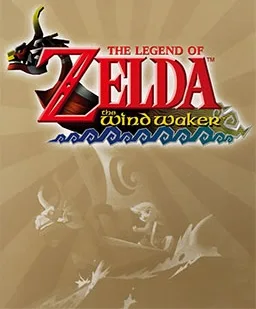
5. The Legend of Zelda: The Wind Waker
That cel-shaded art style got mocked before launch and now looks like the game's biggest asset, it's the one 3D Zelda that hasn't aged a day visually. The Great Sea sailing gets criticized as padding, and fair enough, but Dragon Roost Island and the Forsaken Fortress show Nintendo at its most confident with tone and character.
About The Legend of Zelda: The Wind Waker
A GameCube title famous for its cel-shaded art style and ocean-sailing overworld. Later remastered in HD for Wii U.
- Platform
- GameCube
- Released
- 2002
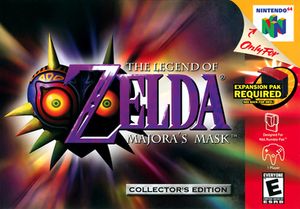
6. The Legend of Zelda: Majora's Mask
Three days, a countdown clock, and a moon with a face that still shows up in nightmares, no other Zelda takes this many risks. The mask transformations and the way NPC schedules loop give Termina a weight that Hyrule rarely gets. It's divisive because the time-limit structure isn't for everyone, but for the people who love it, nothing else compares.
About The Legend of Zelda: Majora's Mask
A Nintendo 64 sequel to Ocarina of Time built around a three-day time loop and mask transformations. Known for its unusually dark tone and the recurring image of a falling moon.
- Platform
- Nintendo 64
- Released
- 2000
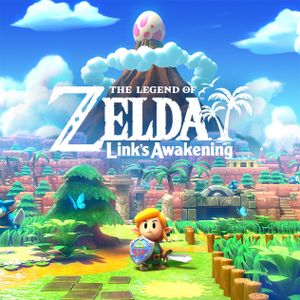
7. The Legend of Zelda: Link's Awakening
A Zelda game that's also a Mario cameo parade, built around a fishing island instead of Hyrule or Ganon. The dream-within-a-dream ending hit harder on the original Game Boy than it had any right to, and the 2019 Switch remake's toy-diorama look suits its strange, small-scale story perfectly.
About The Legend of Zelda: Link's Awakening
Originally a Game Boy title set on Koholint Island rather than Hyrule, remade with a distinctive toy-like art style for Switch in 2019. Notable for including several Mario series enemies and cameos.
- Platform
- Game Boy, Switch (remake)
- Released
- 1993
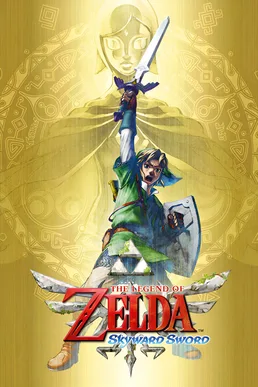
8. The Legend of Zelda: Skyward Sword
Fi's constant interruptions and the Wii MotionPlus sword-swinging get most of the complaints, and they're valid. But the Lanayru Desert redesign, Groose's whole arc, and a genuinely emotional Zelda/Link backstory make this one worth defending. The HD re-release with button controls fixed the biggest complaint years later.
About The Legend of Zelda: Skyward Sword
A Wii game built around motion-controlled swordplay using Wii MotionPlus, later rereleased on Switch with traditional button controls. Chronologically the earliest game in the series' internal timeline.
- Platform
- Wii, Switch (HD)
- Released
- 2011
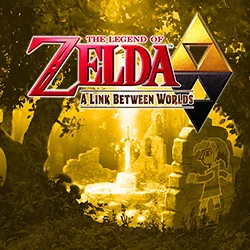
9. The Legend of Zelda: A Link Between Worlds
Renting items instead of finding them in dungeons sounds small, but it lets you tackle Lorule's dungeons in almost any order you want, a huge deal for a series built on strict progression. Wall-merging as a mechanic is simple and it's used constantly and cleverly. This is A Link to the Past's map reused for something genuinely new.
About The Legend of Zelda: A Link Between Worlds
A Nintendo 3DS game that revisits A Link to the Past's map with a new item-rental system and a wall-merging mechanic. Praised for allowing dungeons to be tackled in flexible order.
- Platform
- Nintendo 3DS
- Released
- 2013
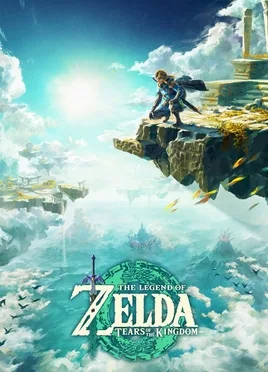
10. The Legend of Zelda: Tears of the Kingdom
Ultrahand and Fuse turn every puzzle into a build-your-own-solution problem, and the Sky Islands and Depths triple the size of a map that was already huge. Some feel it leans too hard on BOTW's Hyrule instead of building a new one, which is a fair complaint, but the sheer amount of stuff you can create here is unmatched in the series.
About The Legend of Zelda: Tears of the Kingdom
A direct sequel to Breath of the Wild on Nintendo Switch, adding Sky Islands, an underground Depths area, and building mechanics like Ultrahand and Fuse.
- Platform
- Switch
- Released
- 2023
#11 to #20
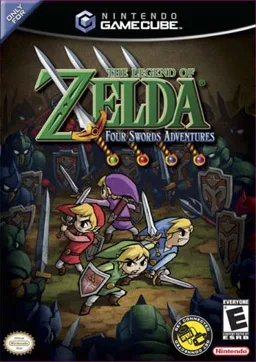
11. The Legend of Zelda: Four Swords Adventures
Built entirely around multiplayer chaos, up to four Links yanking each other around the screen, fighting over rupees, and needing to actually cooperate to solve puzzles. Great with friends on the couch, a lot less interesting alone, which caps how high it can rank.
About The Legend of Zelda: Four Swords Adventures
A GameCube multiplayer-focused entry supporting up to four players connected via Game Boy Advance link cables. Built around cooperative puzzle-solving and competitive rupee collection.
- Platform
- GameCube
- Released
- 2004
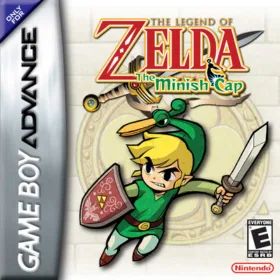
12. The Legend of Zelda: The Minish Cap
Shrinking down to Minish size to explore doll houses and flower gardens is a clever twist that GBA-era Zelda pulled off with real charm. Kinstones and the fusion mechanic give it its own identity instead of just coasting on A Link to the Past's engine, even if it borrows plenty from it.
About The Legend of Zelda: The Minish Cap
A Game Boy Advance title featuring a talking hat named Ezlo and a size-shrinking mechanic that lets Link explore a miniature world. Introduced the Kinstone-fusion feature.
- Platform
- Game Boy Advance
- Released
- 2004
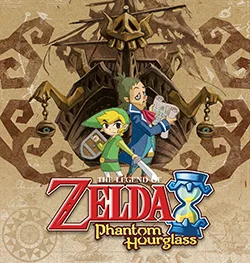
13. The Legend of Zelda: Phantom Hourglass
The touch-screen controls were a genuine experiment for the DS, stylus swordplay, drawing your own map notes, and mostly they worked. The Temple of the Ocean King's repeated backtracking is the one thing almost everyone agrees dragged the whole game down.
About The Legend of Zelda: Phantom Hourglass
A Nintendo DS direct sequel to Wind Waker, controlled entirely with the stylus and touch screen. Best known, for better or worse, for the repeatable Temple of the Ocean King.
- Platform
- Nintendo DS
- Released
- 2007
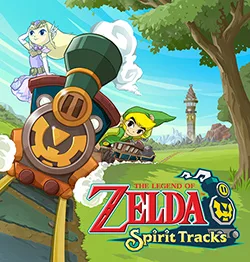
14. The Legend of Zelda: Spirit Tracks
Trading the sailboat for a train sounds like a downgrade and mostly plays like one, since fixed rails are a lot less freeing than open water. Still, controlling Zelda's spirit alongside a Phantom armor suit is a fun twist the DS games hadn't tried before.
About The Legend of Zelda: Spirit Tracks
A Nintendo DS sequel to Phantom Hourglass centered on train travel across New Hyrule. Introduced a mechanic where Zelda's spirit can possess a suit of Phantom armor.
- Platform
- Nintendo DS
- Released
- 2009
15. The Legend of Zelda: Oracle of Seasons
Paired with Oracle of Ages through password links, Seasons leans into action and combat with Onox's more direct, dungeon-crawl-heavy structure. Playable alone, but the password system connecting both games for a combined story was the real hook back on Game Boy Color.
About The Legend of Zelda: Oracle of Seasons
A Game Boy Color game developed with Capcom, released alongside Oracle of Ages with a password system linking the two stories. Focuses more on action and season-changing dungeon puzzles.
- Platform
- Game Boy Color
- Released
- 2001
16. The Legend of Zelda: Oracle of Ages
The time-travel puzzles here are denser and more brain-bending than its sister game, which makes Ages the tougher, more cerebral half of the pair. Still built on the same Link's Awakening engine, but the puzzle design shows real ambition for a Game Boy Color cartridge.
About The Legend of Zelda: Oracle of Ages
The puzzle-and-time-travel-focused half of the Oracle duology, also developed with Capcom for Game Boy Color. Links with Oracle of Seasons via password for a combined storyline.
- Platform
- Game Boy Color
- Released
- 2001
17. The Legend of Zelda
No map markers, no quest log, just a cartridge, a sword you find under a rock, and a note telling you to burn a bush or bomb a wall. It set rules the series still leans on decades later, and the openness to just wander and get lost was genuinely radical for 1986.
About The Legend of Zelda
The game that started the series on the NES/Famicom Disk System, notable for its open, non-linear structure and lack of in-game guidance. Established core series elements like the Master Sword and dungeon numbering.
- Platform
- NES
- Released
- 1986
18. The Legend of Zelda II: The Adventure of Link
Side-scrolling combat and an experience-point leveling system made this the series' biggest swing away from formula, and it's still the one mainline Zelda that plays nothing like the others. Brutal difficulty and cryptic town NPCs make it a rough one to love, but it's fascinating as the road not taken.
About The Legend of Zelda II: The Adventure of Link
A side-scrolling sequel to the original NES game that introduced RPG-style experience points and side-view combat. Remains the only mainline entry built around that action-platformer structure.
- Platform
- NES
- Released
- 1987
19. The Legend of Zelda: Tri Force Heroes
Three-player-only co-op with a Totem mechanic, stacking players on each other's shoulders, is a neat idea that basically requires friends who also own the game. Without a full local group it loses most of its appeal fast, which is why it sits near the bottom despite some clever costume-based mechanics.
About The Legend of Zelda: Tri Force Heroes
A Nintendo 3DS title designed around three-player online or local co-op, featuring a stacking Totem mechanic and costume-based abilities. Offers limited single-player content.
- Platform
- Nintendo 3DS
- Released
- 2015
20. The Legend of Zelda: Echoes of Wisdom
Finally playing as Zelda herself is the headline here, and the Echo system, copying objects and enemies to place them anywhere, gives her a toolkit that's genuinely different from swinging a sword. It's a newer entry still finding its place in fan rankings, but the ideas are fresh enough to earn real attention.
About The Legend of Zelda: Echoes of Wisdom
A Nintendo Switch title that lets players control Princess Zelda as the protagonist for the first time in a mainline game, using an Echo system to duplicate objects and enemies.
- Platform
- Switch
- Released
- 2024
How we ranked them
We weighed dungeon design, overworld freedom, story and atmosphere, mechanical innovation, and how well each game holds up today. Sales numbers and Metacritic scores mattered less than what actually gets discussed and replayed years later. Where the fanbase is genuinely split, and with Zelda, it often is, we made a call and explained why.
Think we got it wrong?
Drag all 20 zelda games into your own list, then download the image or share a link.
Rank these yourselfFAQ
What is the best Zelda game of all time?
Ocarina of Time tops most rankings, including ours, for setting the template 3D Zelda games still follow. Breath of the Wild is the closest challenger for players who prefer open-world freedom over structured dungeons.
What is the hardest Zelda game?
The Legend of Zelda II: The Adventure of Link is widely considered the toughest mainline entry, thanks to punishing combat and a lives system that sends you back to the start of the game on a game over.
What is the best Zelda game to start with?
Breath of the Wild or Link's Awakening (Switch remake) are both good entry points, one for its open, forgiving structure, the other for its shorter, focused story.
Is Tears of the Kingdom better than Breath of the Wild?
Opinion is split. Tears of the Kingdom has more content and deeper building mechanics, but some fans feel it reuses too much of BOTW's Hyrule instead of offering a fresh map.
What is the newest Zelda game?
The Legend of Zelda: Echoes of Wisdom, which lets players control Zelda herself for the first time in a mainline entry.
Which Zelda games are connected as a direct pair?
Oracle of Seasons and Oracle of Ages were designed together, using a password system to link save data and combine their stories.
From the blog
More rankings
Image credits
- The Legend of Zelda: Ocarina of TimeImage: Wikipedia · Source
- The Legend of Zelda: Breath of the WildCover: Wikipedia · Source
- The Legend of Zelda: A Link to the PastCover: Wikipedia · Source
- The Legend of Zelda: Twilight PrincessCover: Wikipedia · Source
- The Legend of Zelda: The Wind WakerCover: Wikipedia · Source
- The Legend of Zelda: Majora's MaskCover: Wikipedia · Source
- The Legend of Zelda: Link's AwakeningCover: Wikipedia · Source
- The Legend of Zelda: Skyward SwordCover: Wikipedia · Source
- The Legend of Zelda: A Link Between WorldsCover: Wikipedia · Source
- The Legend of Zelda: Tears of the KingdomCover: Wikipedia · Source
- The Legend of Zelda: Four Swords AdventuresCover: Wikipedia · Source
- The Legend of Zelda: The Minish CapCover: Wikipedia · Source
- The Legend of Zelda: Phantom HourglassCover: Wikipedia · Source
- The Legend of Zelda: Spirit TracksCover: Wikipedia · Source
- The Legend of Zelda: Oracle of SeasonsCover: Wikipedia · Source
- The Legend of Zelda: Oracle of AgesCover: Wikipedia · Source
- The Legend of ZeldaCover: Wikipedia · Source
- The Legend of Zelda II: The Adventure of LinkCover: Wikipedia · Source
- The Legend of Zelda: Tri Force HeroesCover: Wikipedia · Source
- The Legend of Zelda: Echoes of WisdomCover: Wikipedia · Source