








Card Games Tier List: Every Classic and Modern Game Ranked
Twenty-three card games, from the deck of 52 your grandparents played to the trading card games that take over entire tables at the hobby shop. We're covering kids' games, bluffing games, strategy monsters and the stuff you keep in a drawer for road trips.
Ranking card games is a minefield because everyone learned different house rules and everyone has a game tied to a specific memory. We've tried to separate nostalgia from actual staying power: does it hold up with a new group of players, does it reward skill, does it overstay its welcome. Disagree with where something landed? That's half the fun. Rank your own list and see how it compares.
The tier list
The community’s tier list fills in as members vote. It appears once 5 members have ranked or voted on these.
Think you can rank them better?
Make your own tier listFree account. Your ranking stays private unless you share it, and it counts toward the community tier list.Vote
SS Tier: The all-timers
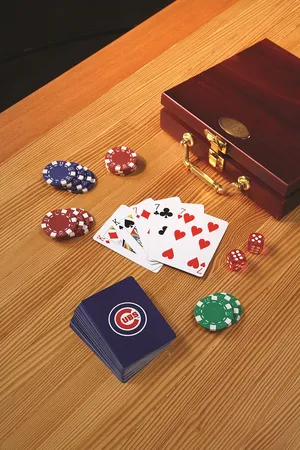
Poker
The reason casinos have card rooms at all. Bluffing, pot odds, reading people across a felt table, it's a genuine skill game dressed up as gambling, and it scales from penny-ante home games to World Series final tables.
About Poker
An umbrella term for a family of betting card games built around hand rankings and bluffing. Countless variants exist, with Texas Hold 'em being the most widely played today.
- Type
- Betting/bluffing game
- Players
- 2+
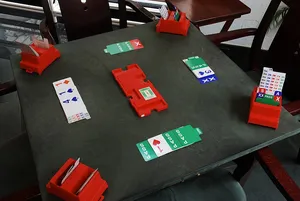
Bridge
The thinking player's card game, full stop. The bidding system alone takes years to master, and serious partnerships study conventions the way chess players study openings. It's not fast or flashy, but nothing rewards depth like bridge does.
About Bridge
A complex trick-taking partnership game with a competitive bidding phase, played and studied seriously around the world at clubs and tournaments.
- Type
- Trick-taking
- Players
- 4 (partnership)
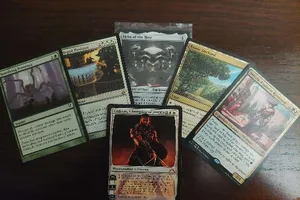
Magic: The Gathering
Invented the whole trading card game category and still runs the deepest competitive scene of any of them. Deck building is basically its own hobby on top of the game, and thirty years in it keeps printing new ways to break the format.
About Magic: The Gathering
A collectible trading card game created by Richard Garfield and published by Wizards of the Coast. Widely credited as the first modern trading card game.
- Publisher
- Wizards of the Coast
- Released
- 1993
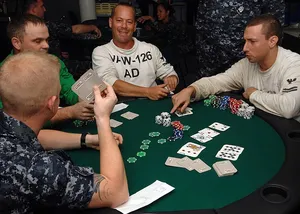
Texas Hold 'em
The poker variant that ate the world. Easy enough to learn in five minutes, deep enough that pros spend decades refining ranges and bet sizing, and it's the backbone of every major tournament broadcast for a reason.
About Texas Hold 'em
The most widely played variant of poker, where each player gets two private cards and shares five community cards. The main format of the World Series of Poker.
- Type
- Poker variant
- Players
- 2-10
AA Tier: Excellent, reach for these often
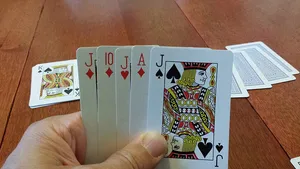
Euchre
Regional in the US but fiercely loved where it's played, especially around the Midwest. Partners, trump suits and the bower cards make for a fast, loud, trash-talking game that rewards reading your partner as much as your hand.
About Euchre
A trick-taking trump game particularly popular in the American Midwest and parts of Canada, played in partnerships of two with a short deck.
- Type
- Trick-taking
- Players
- 4 (partnership)
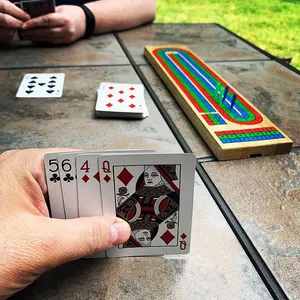
Cribbage
That little pegboard looks old-fashioned, but the counting and the crib make this one of the sharpest two-player games out there. Fifteen-two, fifteen-four, and suddenly you've been playing for an hour without noticing.
About Cribbage
A card game built around counting combinations for points, tracked on a distinctive pegboard.
- Type
- Counting/scoring
- Equipment
- Cribbage board and pegs
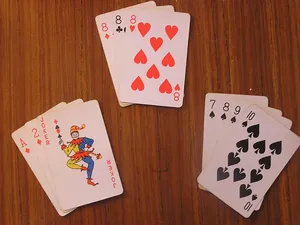
Rummy
The template for half the games on this list. Simple to pick up, with enough decision-making in what you discard and when you go out to keep it interesting hand after hand.
About Rummy
A family of matching-card games where players build sets and runs from their hand, drawing and discarding each turn until someone goes out.
- Type
- Matching/melding
- Players
- 2-6
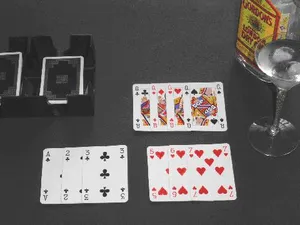
Gin Rummy
Tighter and faster than regular rummy, built for two players who actually want to think. The knock and the undercut give it a push-your-luck tension that straight rummy doesn't have.
About Gin Rummy
A two-player variant of Rummy that speeds up the format with knocking and deadwood scoring. It became especially popular in the mid-20th century.
- Type
- Matching/melding
- Players
- 2
Pokémon Trading Card Game
Friendlier on the wallet and the learning curve than Magic, and it's got a built-in audience that never really goes away. Energy attachment and prize cards give it real structure, not just coin-flip battles.
About Pokémon Trading Card Game
A collectible trading card game based on the Pokémon video game franchise, where players battle using energy, trainer and Pokémon cards.
- Publisher
- The Pokémon Company
- Released
- 1996
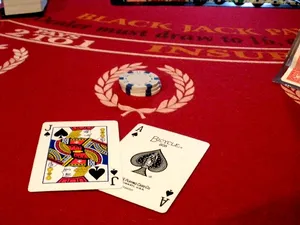
Blackjack
Simple math, real tension, and it's the one casino table game where basic strategy actually moves the odds in your favor. Hit, stand, double down, that's it, and somehow it never gets old.
About Blackjack
A casino banking game where players try to get a hand value as close to 21 as possible without going over. Also known as twenty-one.
- Type
- Casino card game
- Goal
- Reach 21 without busting
BB Tier: Solid, dependable fun
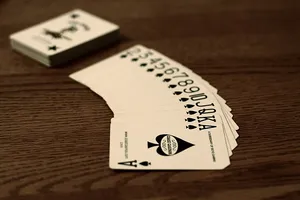
Spades
A college dorm and cookout staple for good reason. Bidding exactly what you'll take and then sandbagging for bags adds a layer of strategy that a lot of trick-taking games skip.
About Spades
A trick-taking partnership game where players bid how many tricks they'll take before playing a hand. Popular in the US, especially in social and dorm settings.
- Type
- Trick-taking
- Players
- 4 (partnership)
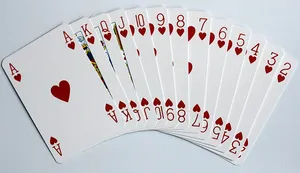
Hearts
Passing cards, shooting the moon, dumping the queen of spades on someone at the worst possible moment. It's a meaner game than it looks, which is exactly why it's stuck around.
About Hearts
A trick-taking game where the goal is to avoid winning certain cards, especially hearts and the queen of spades, unless you're going for the all-or-nothing 'shoot the moon' play.
- Type
- Trick-taking, avoidance
- Players
- 4 typically
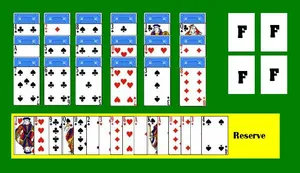
Solitaire
The game everyone's played alone at 2am, often on a computer rather than real cards. No social element at all, but there's a reason it's still the default time-killer on every phone and laptop.
About Solitaire
A broad category of single-player card games, with Klondike being the most common version played worldwide, especially on computers.
- Players
- 1
- Most common variant
- Klondike
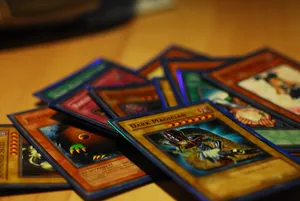
Yu-Gi-Oh! Trading Card Game
Chaotic in the best and worst ways. The power level and combo potential got so extreme over the years that new players can feel lost fast, but the anime nostalgia keeps pulling people back to the table.
About Yu-Gi-Oh! Trading Card Game
A collectible trading card game based on the Yu-Gi-Oh! manga and anime, featuring monster, spell and trap cards in fast, combo-heavy duels.
- Publisher
- Konami
- Released
- 1999
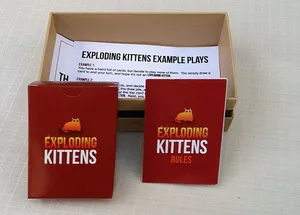
Exploding Kittens
A Kickstarter hit that earns its spot as a genuinely funny party game. It's basically a slicker, better-illustrated take on Russian roulette with cats, and it plays in ten minutes flat.
About Exploding Kittens
A party card game funded through a record-breaking Kickstarter campaign, where players avoid drawing an exploding kitten card using defusal cards.
- Origin
- Kickstarter-funded
- Players
- 2-5
Egyptian Ratscrew
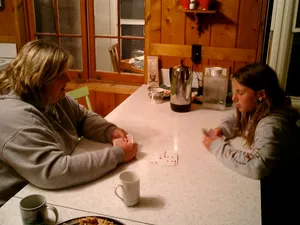
Fast, loud, and it will bruise somebody's hand. Slapping the pile on doubles and sandwiches turns a simple matching game into a reflex battle that gets more intense the longer it goes.
About Egyptian Ratscrew
A fast-paced matching and slapping card game where players race to slap the pile on doubles, sandwiches and other patterns.
- Type
- Reflex/matching
- Players
- 2+
CC Tier: Fine in the right mood
Crazy Eights
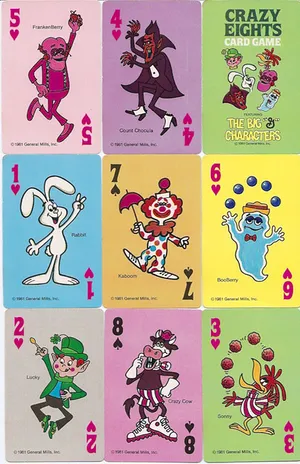
The spiritual ancestor of Uno, and honestly still fine on its own. Wild eights, matching suits and numbers, nothing revolutionary but nothing wrong with it either.
About Crazy Eights
A shedding card game where players match by suit or rank and use eights as wild cards. Considered a direct predecessor to Uno.
- Type
- Shedding game
- Players
- 2-7
Cards Against Humanity
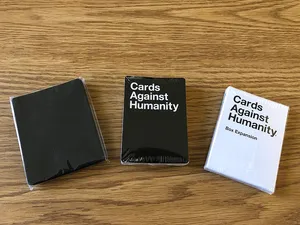
Great at a party with the right crowd, exhausting with the wrong one. The shock humor hits differently depending on who's at the table, and it's a game people tend to either love or quietly dread.
About Cards Against Humanity
A fill-in-the-blank party game built around dark, raunchy humor, where players match answer cards to a prompt card for laughs.
- Type
- Party game
- Players
- 4+
Uno
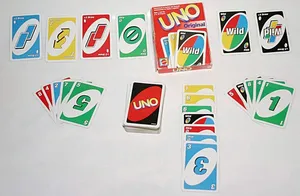
Everyone owns a deck, everyone's argued about the stacking rule, and somehow that argument is half the appeal. It's simple family fun that occasionally turns genuinely vicious over a draw-four card.
About Uno
A matching card game released by Mattel, built around colors, numbers and action cards like Draw Two and Reverse. It's one of the best-selling card games in the world.
- Publisher
- Mattel
- Players
- 2-10
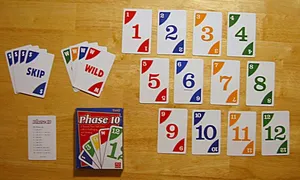
Phase 10
Rummy with a checklist bolted on. The ten phases give it structure that keeps people coming back, even if a bad run of cards can leave you stuck on phase two for three rounds straight.
About Phase 10
A rummy-style card game by Mattel where players work through ten specific 'phases' of card combinations in order to win.
- Publisher
- Mattel
- Players
- 2-6
DD Tier: Mostly nostalgia at this point
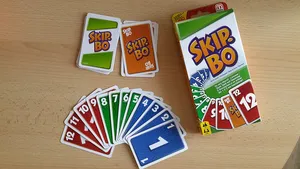
Skip-Bo
A perfectly pleasant stacking game that nobody gets excited about. It fills time at a family gathering without ever being anyone's favorite thing to play.
About Skip-Bo
A sequencing card game where players race to empty their stock pile by building ascending runs, originally created by Mattel's Skip-Bo brand.
- Publisher
- Mattel
- Players
- 2-6
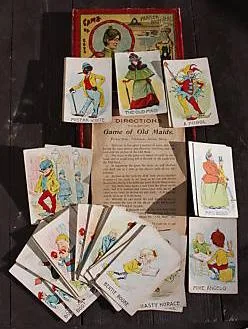
Old Maid
A kids' introduction to card games and not much more than that. Once you've aged past six or seven, there's genuinely nothing here to come back for.
About Old Maid
A simple matching card game for children, where players pair up cards and try to avoid being left holding the odd unmatched card.
- Type
- Matching, children's game
- Players
- 2+
FF Tier: Time to retire this one
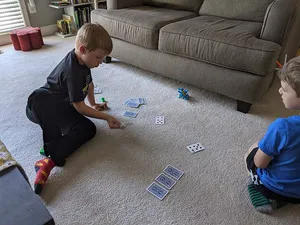
War
Zero decisions, zero skill, just flipping cards and seeing whose number is bigger. It teaches small kids how a deck works and that's about the whole case for it.
About War
A simple children's card game with no decisions involved. The deck is split evenly and players flip cards, with the higher card winning both, until one player holds the whole deck.
- Type
- Luck-based
- Players
- 2
How we ranked them
We weighed replayability, depth of strategy, how well each game scales across different group sizes, and how it's held up against newer competition. Luck-heavy party games are judged on fun-per-minute rather than strategic depth, while trading card games and bridge are judged on the ceiling they offer serious players. We leaned on forum consensus, reviews and our own table-tested opinions where fans are split.
Think we got it wrong?
Drag all 23 card games into your own tier list, then download the image or share a link.
Rank these yourselfFAQ
What's the best card game for beginners?
Uno or Crazy Eights are the easiest entry points since the rules take about two minutes to explain. For something with more depth but still approachable, try Rummy or Hearts.
What's the best two-player card game?
Gin Rummy and Cribbage are the classic picks, both fast, both skill-based, both built specifically around a duel rather than a group.
Is poker a skill game or a luck game?
Both, but over enough hands skill wins out. That's why the same pros keep showing up at final tables year after year instead of it being random winners every time.
What's the difference between Magic: The Gathering and Pokémon TCG?
Magic has deeper, more complex deck building and a bigger competitive scene, while Pokémon TCG is generally easier to learn and cheaper to get into, with a more casual, nostalgia-driven fanbase.
Why is War considered a bad card game?
There are no decisions to make at any point. Every card is played automatically and the outcome is decided entirely by shuffle luck, which is why most adults outgrow it quickly.
Is bridge hard to learn?
The basic rules aren't bad, but competitive bridge involves bidding conventions that take serious study. That depth is exactly why longtime players rate it so highly.
More rankings
Image credits
- PokerPhoto: Personal Creations, CC BY 2.0 (Wikimedia Commons) · License · Source
- BridgePhoto: KoeppiK, CC BY-SA 3.0 (Wikimedia Commons) · License · Source
- Magic: The GatheringPhoto: Izzy545454, CC BY 4.0 (Wikimedia Commons) · License · Source
- Texas Hold 'emPhoto: U.S. Navy photo by Mass Communication Specialist Seaman David Finley, Public domain (Wikimedia Commons) · Source
- EuchrePhoto: RichardBH from Hamilton, Canada, CC BY 2.0 (Wikimedia Commons) · License · Source
- CribbagePhoto: J Wynia from Minneapolis, United States, CC BY 2.0 (Wikimedia Commons) · License · Source
- RummyPhoto: Adamt, Public domain (Wikimedia Commons) · Source
- Gin RummyPhoto: Roland Scheicher / Roland Scheicher at German Wikipedia, Public domain (Wikimedia Commons) · Source
- Pokémon Trading Card GameLogo: The Pokémon Company International, Public domain (Wikimedia Commons) · Source
- BlackjackPhoto: Rickyar (talk) Rickyar, Public domain (Wikimedia Commons) · Source
- SpadesPhoto: Andrew Smith from Seattle, WA, USA, CC BY-SA 2.0 (Wikimedia Commons) · License · Source
- HeartsPhoto: Bermicourt, CC BY-SA 4.0 (Wikimedia Commons) · License · Source
- SolitairePhoto: No machine-readable author provided. Nanami Kamimura assumed (based on copyright claims)., Public domain (Wikimedia Commons) · Source
- Yu-Gi-Oh! Trading Card GamePhoto: Timothy Tsui, CC BY-SA 2.0 (Wikimedia Commons) · License · Source
- Exploding KittensPhoto: Geraldshields11, CC BY-SA 4.0 (Wikimedia Commons) · License · Source
- Egyptian RatscrewPhoto: iBjorn, CC BY-SA 2.0 (via Openverse) · License · Source
- Crazy EightsPhoto: Gregg Koenig, CC BY-SA 4.0 (Wikimedia Commons) · License · Source
- Cards Against HumanityPhoto: FASTILY, CC BY-SA 4.0 (Wikimedia Commons) · License · Source
- UnoPhoto: en:User:Cburnett, Public domain (Wikimedia Commons) · Source
- Phase 10Photo: Jagriff1 at English Wikipedia, Public domain (Wikimedia Commons) · Source
- Skip-BoPhoto: Daliiiah, CC BY-SA 4.0 (Wikimedia Commons) · License · Source
- Old MaidPhoto: ItsLassieTime (talk) 05:34, 28 October 2008 (UTC), Public domain (Wikimedia Commons) · Source
- WarPhoto: Larry Koester, CC BY 2.0 (Wikimedia Commons) · License · Source