









Board Games Tier List: 30 Classics Ranked
From ancient abstract strategy to cardboard-and-plastic nostalgia bombs, we put 30 of the most-played board games side by side and sorted out who actually earns a spot on the shelf. This covers the dusty closet classics, the modern hobby darlings, and a few party games you only bring out after the second round of drinks.
Ranking games this different is a little unfair, we know. A 4,000-year-old abstract strategy game and a hippo-themed marble grabber are not playing on the same field. But that's the fun of a tier list. Disagree with us? That's what the comments are for.
The tier list
The community’s tier list fills in as members vote. It appears once 5 members have ranked or voted on these.
Think you can rank them better?
Make your own tier listFree account. Your ranking stays private unless you share it, and it counts toward the community tier list.Vote
SS Tier: The gold standard
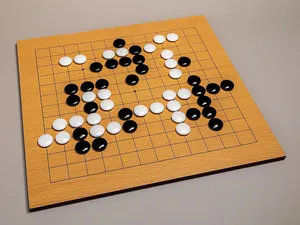
Go
Thousands of years old and still one of the deepest strategy games ever made, with rules you can learn in five minutes and a skill ceiling nobody has ever hit. Simple black and white stones, infinite complexity. It's the game chess players respect and AI researchers obsess over.
About Go
An ancient abstract strategy game from East Asia where players place stones on a grid to control territory. Considered one of the deepest strategy games in existence due to its enormous number of possible positions.
- Players
- 2
- Origin
- Ancient China
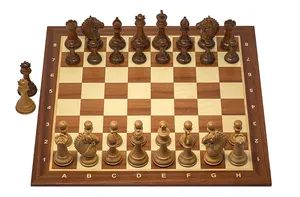
Chess
The benchmark every strategy game gets compared to, and for good reason. No luck, no hidden information, just two people and the board. There's a reason it has world championships, a massive online scene, and a permanent place in pop culture.
About Chess
An ancient two-player strategy game of perfect information, played on an 8x8 board with 16 pieces per side. Has roots going back over a thousand years and a massive global competitive scene.
- Players
- 2
- Origin
- Likely India/Persia region, medieval era
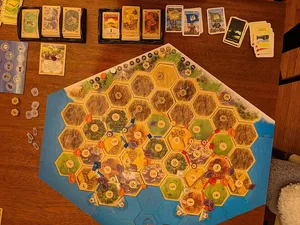
Catan
The game that convinced a generation of Monopoly-weary adults that board games could be smart and social at the same time. Trading sheep for wheat sounds boring until someone blocks your road with the robber and the table erupts. It basically launched the modern hobby board game boom.
About Catan
A resource-trading and settlement-building game originally published in Germany in 1995 as Die Siedler von Catan. Widely credited with popularizing modern hobby board games in the English-speaking world.
- Designer
- Klaus Teuber
- Players
- 3-4 (up to 6 with expansion)
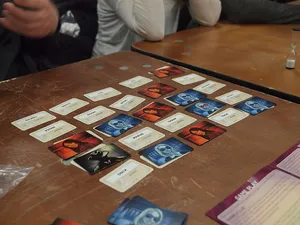
Codenames
Give one clue, connect multiple words, watch your teammates spectacularly misread your mind. It plays well with four people or fourteen, works for serious gamers and people who've never owned a board game, and somehow never gets old.
About Codenames
A word-association party game where two teams try to guess which words belong to them based on one-word clues from their spymaster. Published in 2015.
- Designer
- Vlaada Chvatil
- Players
- 2-8+
AA Tier: Excellent, no asterisks
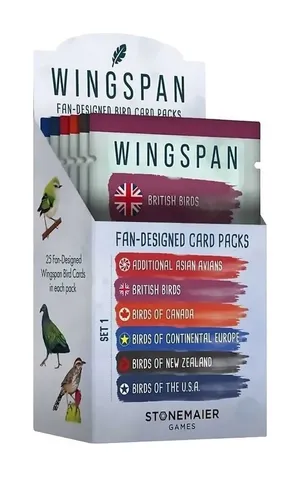
Wingspan
Gorgeous bird illustrations wrapped around an engine-building game that's actually got teeth. It proved that a game about birds and eggs could out-sell plenty of games about dragons and war. Great for people who think they don't like "strategy games."
About Wingspan
An engine-building card game about attracting birds to wildlife habitats, played across a series of rounds with increasingly powerful bird cards. Published in 2019.
- Designer
- Elizabeth Hargrave
- Players
- 1-5
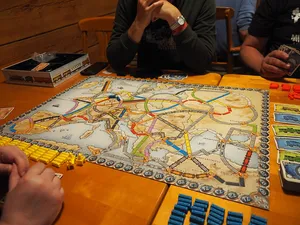
Ticket to Ride
Collect train cards, claim routes across a map, quietly sabotage your friend's cross-country connection. It's the gateway drug of modern board gaming, easy enough for a ten-year-old but tense enough to make adults sweat over a single stretch of track between Denver and Helena.
About Ticket to Ride
A train route-building board game published in 2004, where players collect cards to claim railway routes across a map. Known for its accessible rules and wide variety of map expansions.
- Designer
- Alan R. Moon
- Players
- 2-5
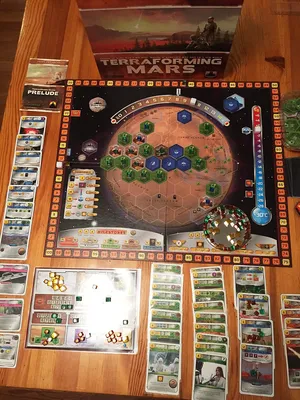
Terraforming Mars
A meaty, card-driven game about literally building an atmosphere on Mars, and it earns every bit of its reputation among hobby gamers. It's a longer sit than most games on this list, but the slow build from barren rock to green planet is genuinely satisfying.
About Terraforming Mars
A strategy board game where players represent corporations working to transform Mars into a habitable planet by raising temperature, oxygen, and ocean coverage. Published in 2016.
- Designer
- Jacob Fryxelius
- Players
- 1-5
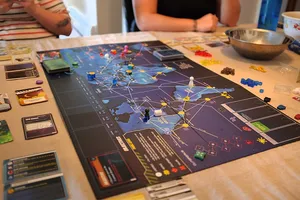
Pandemic
A cooperative game where you and your friends either save the world together or lose together, which somehow makes losing feel almost as fun as winning. It flipped the usual board game formula on its head and inspired a whole wave of co-op designs.
About Pandemic
A cooperative board game where players work together as disease specialists to stop global outbreaks before they spiral out of control. Published in 2008.
- Designer
- Matt Leacock
- Players
- 2-4
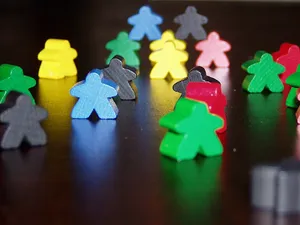
Carcassonne
Lay a tile, place a meeple, watch a medieval landscape of cities, roads, and farms grow across the table. It's quieter than Catan but just as addictive, and the tile-laying puzzle never quite plays the same way twice.
About Carcassonne
A tile-placement game where players build a medieval landscape of cities, roads, and fields, placing meeples to claim features. Originally published in Germany in 2000.
- Designer
- Klaus-Jurgen Wrede
- Players
- 2-5
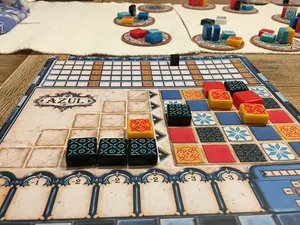
Azul
You're just picking colored tiles and arranging them in patterns, but the tension of denying your opponent the exact tile they need is pure genius. Looks like a fancy coffee table decoration, plays like a sharp little puzzle.
About Azul
A tile-drafting game where players collect colored tiles to build patterns on a personal board inspired by Portuguese azulejo tiles. Published in 2017.
- Designer
- Michael Kiesling
- Players
- 2-4
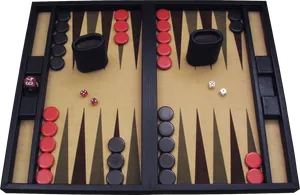
Backgammon
Dice and strategy in near-perfect balance, which is why it's survived in bars, cafes, and living rooms for centuries. The doubling cube adds a layer of psychological warfare most casual players never even get into.
About Backgammon
One of the oldest known board games, played with dice and checkers-style pieces moved around a board of triangular points. Combines luck and strategy with a distinctive doubling cube for raising stakes.
- Players
- 2
- Origin
- Ancient Middle East
BB Tier: Solidly good fun
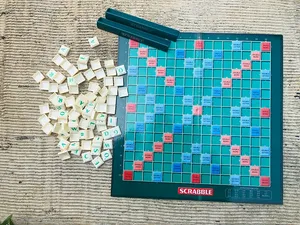
Scrabble
Still the king of word games, even if the arguments over whether "qi" is a real word have ended more than one dinner party peacefully. Reward for a good vocabulary and a willingness to sacrifice points for a triple word score.
About Scrabble
A word-building game where players place letter tiles on a grid to score points based on letter value and placement. Created in the 1930s/40s by Alfred Mosher Butts.
- Publisher
- Hasbro/Mattel
- Players
- 2-4
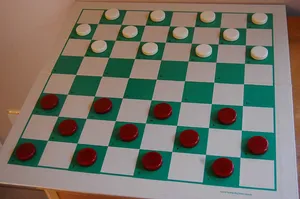
Checkers
Simple, fast, and still got some real strategy buried in those diagonal jumps. It lives a little in chess's shadow, but it's a genuinely good game in its own right, especially for teaching kids to think a few moves ahead.
About Checkers
An ancient two-player abstract strategy game played on a grid board, where players capture opponent pieces by jumping over them diagonally. Known as draughts outside North America.
- Players
- 2
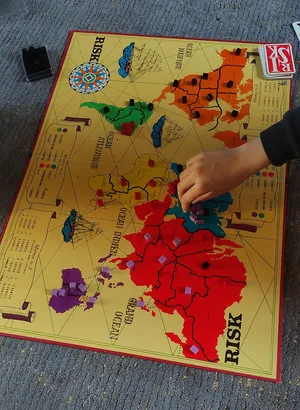
Risk
Grand ambitions of world domination, undercut by dice that don't care about your grand ambitions. When the dice go your way, nothing beats steamrolling across Asia; when they don't, you'll remember it for years.
About Risk
Players attempt to capture territories across a world map and eliminate opponents.
- Publisher
- Hasbro
- Players
- 2-6
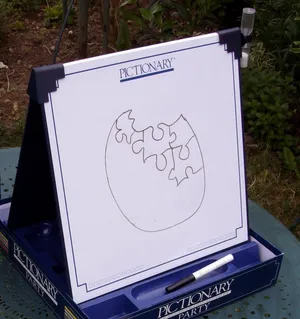
Pictionary
Terrible drawings, frantic guessing, somebody always drawing a stick figure for "democracy" with thirty seconds left. It's a party game that works because it's forgiving of bad art and rewards fast thinking.
About Pictionary
A charades-style party game where players draw clues for their team to guess within a time limit. First published in the 1980s.
- Publisher
- Hasbro/Mattel
- Players
- 3+
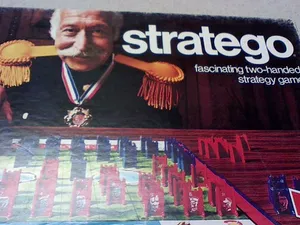
Stratego
Hidden information and bluffing dressed up as a war game, where your Marshal can lose to a lowly Spy if you're careless. Underrated next to Chess, but it scratches a different itch entirely, more about reading your opponent than pure calculation.
About Stratego
A two-player strategy game of hidden military ranks, where players try to capture the opponent's flag while bluffing about piece strength. Has roots in 19th-century games, modern version popularized in the mid-20th century.
- Players
- 2
Trivial Pursuit
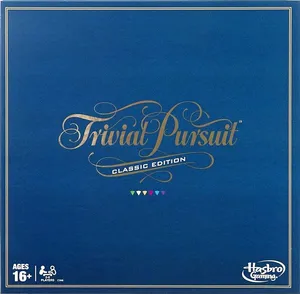
The original trivia night in a box, and still a reliable party pick if your group actually knows things. Its weakness is also its charm: those little pie wedges take forever to fill, so games can run long.
About Trivial Pursuit
A trivia-based board game where players answer questions across multiple categories to collect wedges. First released in the early 1980s.
- Publisher
- Hasbro
- Players
- 2+
Scattergories
A timer, a list of categories, and the letter Q staring you down. It's a party game that rewards quick thinking and creative loopholes (does "Quincy" count as a city starting with Q? your group will argue about it every time).
About Scattergories
A category-based word game where players list items starting with a given letter across various categories before time runs out. Published by Milton Bradley/Hasbro.
- Players
- 2-6
Boggle
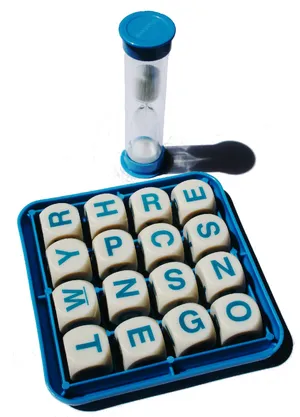
Shake the grid, find the words, scribble fast before the timer runs out. Smaller and quicker than Scrabble, and honestly just as satisfying when you spot a six-letter word nobody else saw.
About Boggle
A word-finding game where players shake lettered dice into a grid and race to find as many words as possible before time runs out. First released in the 1970s.
- Publisher
- Hasbro
- Players
- 2+
CC Tier: Fine in the right mood
Yahtzee
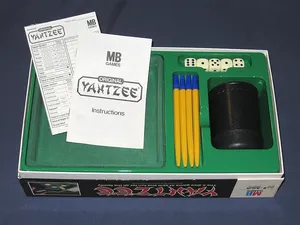
Dice rolling with just enough decision-making to feel like a game and not just gambling. It's fine for a casual night, but there's a reason nobody's running Yahtzee tournaments the way they run poker nights.
About Yahtzee
A dice game where players roll five dice to form scoring combinations similar to poker hands. Commercialized by Milton Bradley/Hasbro in the 1950s.
- Publisher
- Hasbro
- Players
- 2+
Clue
Was it Colonel Mustard in the library? The deduction is genuinely clever, but the game drags once you've played it a dozen times and memorized everyone's tells. Still a solid mystery night pick.
About Clue
A murder mystery deduction game, known as Cluedo outside North America, first published in the late 1940s. Players move around a mansion gathering clues to solve who committed the murder, where, and with what weapon.
- Publisher
- Hasbro
- Players
- 3-6
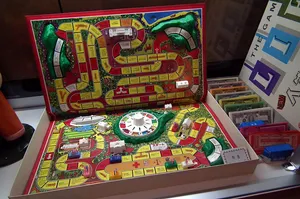
The Game of Life
A nostalgic spin of the wheel through career, marriage, and kids, with almost no actual decisions beyond a couple of forks in the road. Fun as a kid, pretty thin as an adult, but that little plastic car still holds a soft spot.
About The Game of Life
A roll-and-move board game simulating a life path of education, careers, marriage, and retirement. Based on an earlier 19th-century game and relaunched by Milton Bradley in 1960.
- Publisher
- Hasbro
- Players
- 2-4
Guess Who?
A surprisingly solid lesson in deductive logic for a game aimed at six-year-olds. Simple, quick, and better as a two-player game than most people give it credit for, though it wears thin after you've played it twenty times.
About Guess Who?
A two-player deduction game where players ask yes/no questions to guess which character their opponent has chosen. First published in the early 1980s.
- Publisher
- Hasbro
- Players
- 2
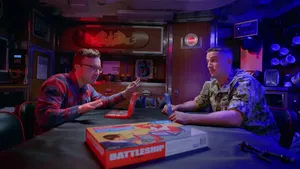
Battleship
Calling out coordinates and hoping for a hit has a certain primal appeal, but there's not much strategy once you understand the grid. Nostalgic, quick, and honestly more fun as a kid than as an adult.
About Battleship
A naval combat guessing game where players call out grid coordinates to try to sink an opponent's hidden fleet. Published as a board game by Milton Bradley in the 1960s, based on older paper-and-pencil games.
- Publisher
- Hasbro
- Players
- 2
DD Tier: Showing its age
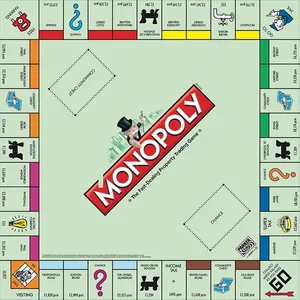
Monopoly
The most-owned board game on the planet and also the one most likely to end a friendship. Games drag on forever, somebody always hoards the orange properties, and the rules people actually use (Free Parking cash, anyone?) usually aren't even the real rules. A cultural icon more than a genuinely great game.
About Monopoly
A property-trading board game first published by Parker Brothers in the 1930s, based on earlier designs including The Landlord's Game. Players buy, trade, and develop properties while trying to bankrupt opponents.
- Publisher
- Hasbro
- Players
- 2-8
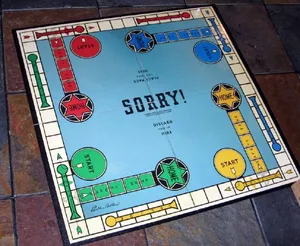
Sorry!
Pure luck of the draw dressed up as a race game. It's fine for young kids learning to count and take turns, but there's very little here for anyone past the age of eight.
About Sorry!
A simple race game where players use cards to move pawns around a track and send opponents' pieces back to start. Published for decades by Parker Brothers/Hasbro.
- Publisher
- Hasbro
- Players
- 2-4
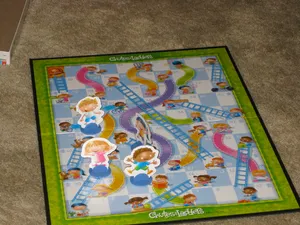
Chutes and Ladders
Zero decisions, pure spinner luck, and a lesson in delayed gratification for small children. Adults tolerate it because the kids love the chutes; nobody over age seven is asking to play again.
About Chutes and Ladders
A classic children's race game based on the ancient Indian game Snakes and Ladders. Players climb ladders for good luck and slide down chutes for bad luck on the way to the finish.
- Publisher
- Hasbro
- Players
- 2-4
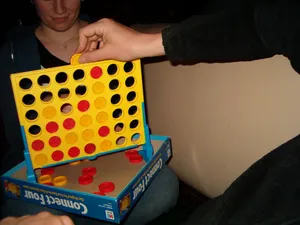
Connect Four
A decent little tactical puzzle hiding inside a very simple drop-and-stack format, but it's basically a solved game (the first player wins with perfect play). Good for a quick five minutes, not much beyond that.
About Connect Four
A two-player vertical grid game where players drop discs trying to connect four in a row. Released by Milton Bradley in 1974.
- Publisher
- Hasbro
- Players
- 2
FF Tier: Time to retire it
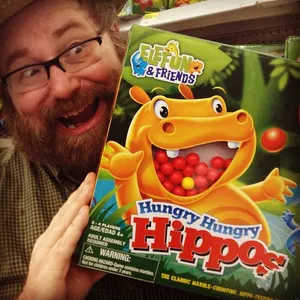
Hungry Hungry Hippos
Slamming a lever so a plastic hippo eats marbles isn't really a game so much as a reflex test. Fun for about ninety seconds at age five, and that's about the ceiling here.
About Hungry Hungry Hippos
A children's action game where players rapidly press levers to make plastic hippos "eat" marbles. Released by Milton Bradley in the early 1970s.
- Publisher
- Hasbro
- Players
- 2-4
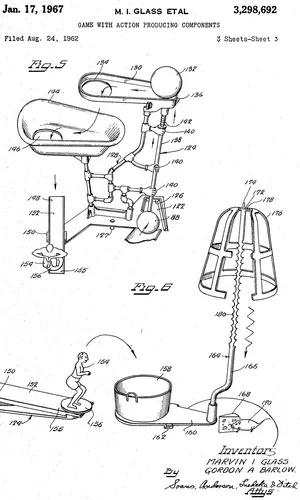
Mouse Trap
Famous for the elaborate Rube Goldberg contraption, infamous for being a genuinely bad game once you actually sit down to play it. Most kids just want to build the trap and skip the actual rules entirely, which tells you everything.
About Mouse Trap
A children's board game built around assembling a working Rube Goldberg-style trap over the course of play. First published by Ideal in 1963.
- Publisher
- Hasbro
- Players
- 2-4
How we ranked them
We weighed replayability, how well the game holds up after you've played it fifty times, depth of strategy versus luck, how much it rewards skill, and how the broader board game community (forums, BoardGameGeek threads, family game night debates) talks about it. We also factored in cultural footprint, because a game that's shaped how people think about board games in general deserves credit even if it's not the deepest experience on the table.
Think we got it wrong?
Drag all 30 board games into your own tier list, then download the image or share a link.
Rank these yourselfFAQ
What is the best board game of all time?
There's no single answer, but Go and Chess are the most commonly cited for pure strategic depth, while Catan is usually credited with kickstarting the modern board game boom.
What board game should beginners start with?
Ticket to Ride and Catan are the most recommended starting points for people new to hobby board games. Both are easy to learn but have enough depth to stay interesting.
Is Monopoly actually a bad game?
It's not that it's badly designed, it's that games run too long and a lot of house rules people grew up with actually slow it down further. Most hobby gamers consider it outdated compared to modern alternatives.
What's a good party board game for a big group?
Codenames and Scattergories both scale well to large groups and don't require much setup or explanation, which makes them reliable picks for game night with a crowd.
Which board games are good for two players?
Chess, Go, Backgammon, and Checkers are all built for two and have been refined over centuries. Stratego and Battleship also work well if you want something with hidden information.
More rankings
Image credits
- GoPhoto: Dietmar Rabich, CC BY-SA 4.0 (Wikimedia Commons) · License · Source
- ChessPhoto: Wilfredor, CC0 (Wikimedia Commons) · License · Source
- CatanPhoto: WalkingRadiance, CC BY-SA 4.0 (Wikimedia Commons) · License · Source
- CodenamesPhoto: JIP, CC BY-SA 3.0 (Wikimedia Commons) · License · Source
- WingspanPhoto: Asmodee, CC0 (Wikimedia Commons) · License · Source
- Ticket to RidePhoto: JIP, CC BY-SA 4.0 (Wikimedia Commons) · License · Source
- Terraforming MarsPhoto: BiblioteKarin, CC BY-SA 4.0 (Wikimedia Commons) · License · Source
- PandemicPhoto: Sean Hagen from Vancouver, Canada, CC BY-SA 2.0 (Wikimedia Commons) · License · Source
- CarcassonnePhoto: Júlio Reis (User:Tintazul), CC BY-SA 2.5 (Wikimedia Commons) · License · Source
- AzulPhoto: Gábor Zehetmayer, CC0 (Wikimedia Commons) · License · Source
- BackgammonPhoto: Ptkfgs, Public domain (Wikimedia Commons) · Source
- ScrabblePhoto: Naeniharseel, CC BY-SA 4.0 (Wikimedia Commons) · License · Source
- CheckersPhoto: Jud McCranie, CC BY 3.0 (Wikimedia Commons) · License · Source
- RiskPhoto: Document02, CC0 (Wikimedia Commons) · License · Source
- PictionaryPhoto: User François Haffner on fr.wikipedia, Public domain (Wikimedia Commons) · Source
- StrategoPhoto: GorillaSushi, CC BY-SA 2.0 (via Openverse) · License · Source
- Trivial PursuitPhoto: Unknown, Public domain (Wikimedia Commons) · Source
- ScattergoriesCover: Wikipedia · Source
- BogglePhoto: Stilfehler, CC BY-SA 3.0 (Wikimedia Commons) · License · Source
- YahtzeePhoto: Nema Evin, CC BY-SA 4.0 (Wikimedia Commons) · License · Source
- ClueLogo: Unknown, Public domain (Wikimedia Commons) · Source
- The Game of LifePhoto: 松岡明芳, CC BY-SA 3.0 (Wikimedia Commons) · License · Source
- Guess Who?Logo: Unknown, Public domain (Wikimedia Commons) · Source
- BattleshipPhoto: US Navy, Public domain (Wikimedia Commons) · Source
- MonopolyPhoto: Hasbro, Public domain (Wikimedia Commons) · Source
- Sorry!Photo: myguitarzz on Flickr, CC BY 2.0 (Wikimedia Commons) · License · Source
- Chutes and LaddersPhoto: Make Lemons, CC BY-SA 2.0 (via Openverse) · License · Source
- Connect FourPhoto: Jonathan Kellenberg from Seattle, WA, CC BY 2.0 (Wikimedia Commons) · License · Source
- Hungry Hungry HipposPhoto: JeepersMedia, CC BY 2.0 (via Openverse) · License · Source
- Mouse TrapPhoto: Marvin I. Glass and Gordon A. Barlow, Public domain (Wikimedia Commons) · Source